SoftBank Leads Six Firms in $130M Quantum Materials R&D Project
SoftBank and five partner firms have secured a $130 million NEDO‑backed project to build a quantum‑AI platform for cross‑industry materials discovery.
Introduction
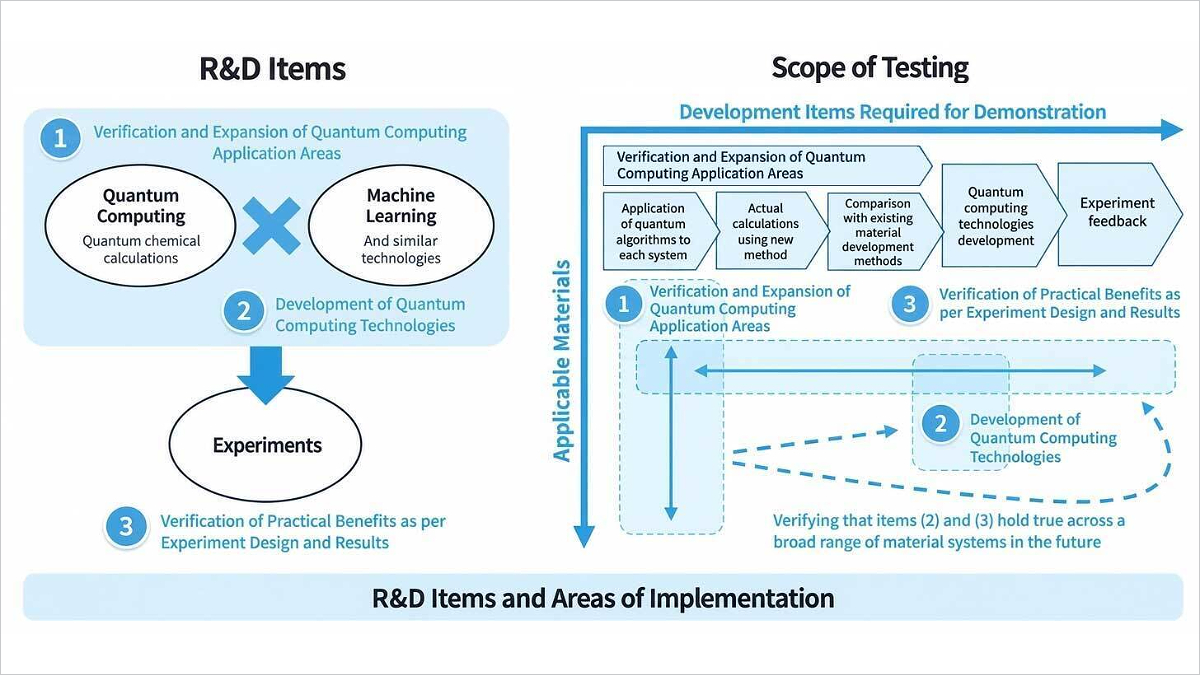
SoftBank Corp. is spearheading a multi‑company research effort funded with $130 million by Japan’s New Energy and Industrial Technology Development Organization (NEDO). The consortium—SoftBank, TOPPAN Holdings, AISIN Corporation, Asahi Kasei, AGC Inc., and DIC Corporation—will develop a quantum‑computing‑based materials‑development platform that blends quantum simulations with artificial‑intelligence (AI) techniques. Running from fiscal 2026 through fiscal 2028, the project aims to move quantum calculations from laboratory demos to practical, industry‑scale applications.
Why Quantum Meets AI for Materials
Traditional materials discovery relies on trial‑and‑error experiments and classical computational models that struggle with complex quantum phenomena such as electron correlation and superconductivity. Quantum computers can model these effects natively, but their raw output often lacks the statistical robustness needed for engineering decisions. By integrating machine‑learning algorithms that ingest quantum simulation data alongside experimental results, the consortium hopes to:
- Accelerate prediction of key properties (e.g., ionic conductivity, optical bandgap, mechanical strength).
- Reduce the number of costly physical prototypes.
- Enable rapid iteration across diverse material families—organic electrolytes, polymer matrices, inorganic electrodes, colorants, and semiconductor compounds.
Cross‑Industry Verification
Each partner will validate the platform within its core domain:
| Company | Focus Area | Expected Impact | |---------|------------|-----------------| | TOPPAN Holdings | Optical and functional films | Faster design of high‑performance coatings and display materials | | AISIN Corporation | Automotive components | Early‑stage discovery of lightweight, high‑strength alloys and battery materials | | Asahi Kasei | Chemical and polymer solutions | Streamlined synthesis routes for next‑generation polymers and electrolytes | | AGC Inc. | Glass and specialty ceramics | Quantum‑guided optimization of optical clarity and thermal stability | | DIC Corporation | Colorants and semiconductor substrates | Predictive modeling of electronic band structures for advanced semiconductors |
The distributed verification model ensures that breakthroughs are tested in real‑world production settings, not just in academic labs. Collaboration with leading quantum‑hardware providers will supply the necessary qubit resources and error‑mitigation tools.
Practical Outlook
By the end of fiscal 2028, the consortium aims to deliver a continuously learning platform that updates its predictive models as new experimental data flow in. If successful, the initiative could set a template for how Japanese industry leverages quantum advantage across sectors, potentially shortening development cycles for batteries, superconductors, and high‑performance optics by years. Stakeholders should watch for:
- Early benchmark results from pilot studies (expected mid‑2027).
- Publication of open‑source datasets that combine quantum simulation outputs with AI‑enhanced analyses.
- Expansion of the partnership to include additional manufacturers or academic labs seeking to adopt the platform.
Conclusion
SoftBank’s leadership in this $130 million NEDO project underscores a strategic shift: quantum computing is no longer a niche research curiosity but a practical tool for industrial innovation when paired with AI. The six‑company consortium’s cross‑industry approach could accelerate material breakthroughs that are critical for next‑generation batteries, optics, and semiconductors, positioning Japan at the forefront of quantum‑enabled manufacturing.
Source
Read original sourceWhy we picked this
Accepted from curated QuantumUnzipped source (relevance scoring disabled).