South Korea Launches 614 PFLOPS Hangang Supercomputer Ahead of May 2027 IonQ Quantum Link
South Korea’s new Hangang supercomputer, delivering 614 PFLOPS, will serve as the HPC backbone for a hybrid quantum‑classical platform that links to IonQ’s trapped‑ion processor by May 2027.
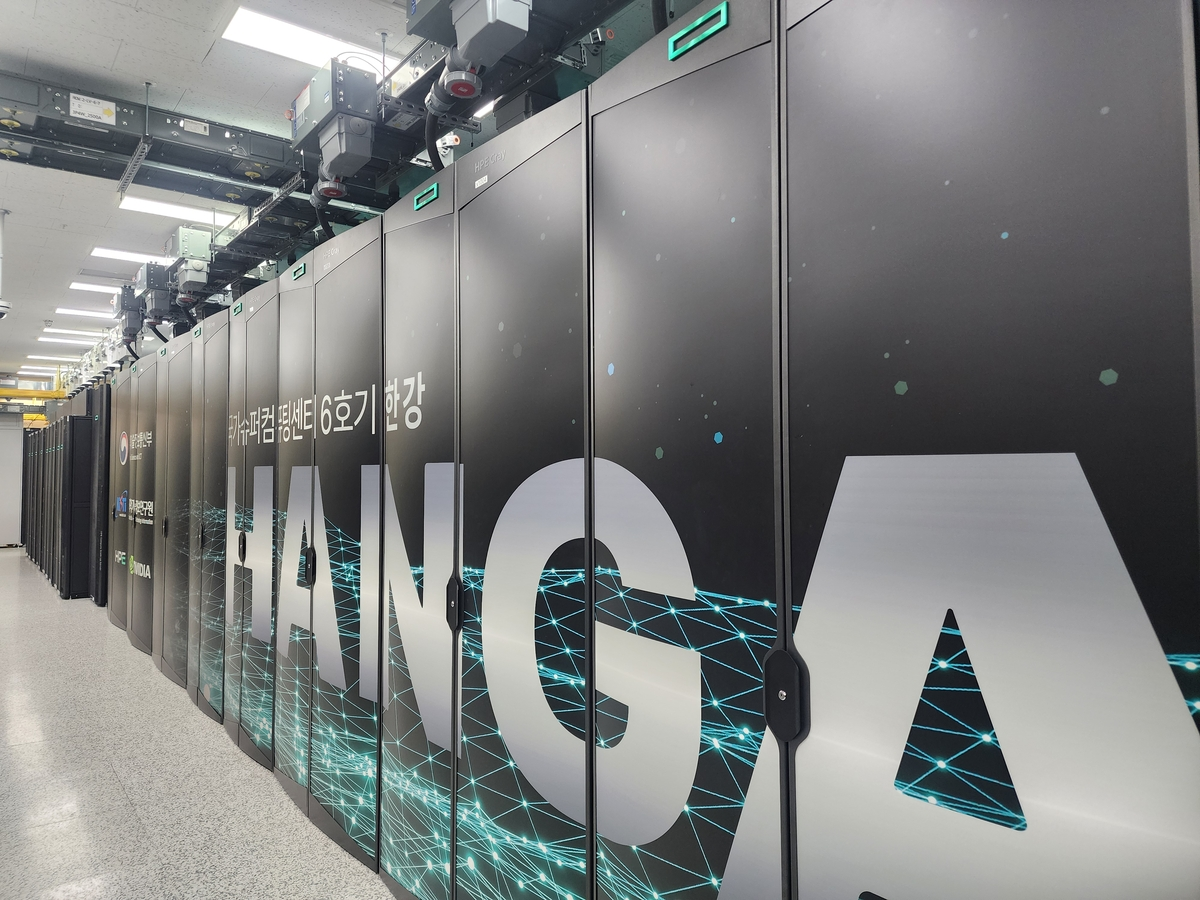
South Korea’s Hangang Supercomputer: A 614 PFLOPS Platform for Hybrid Quantum‑Classical Computing
South Korea has officially launched Hangang, its sixth national supercomputer, at the Korea Institute of Science and Technology Information (KISTI) in Daejeon. Built on HPE’s Cray EX400 architecture and equipped with 8,496 Nvidia GH200 Grace‑Hopper superchips, Hangang reaches a theoretical peak of 614 petaflops, a 24‑fold jump over the previous Nurion system. Beyond raw speed, Hangang is purpose‑designed to become the high‑performance computing (HPC) backbone of South Korea’s first hybrid quantum‑classical platform, slated to connect on‑site with IonQ’s Tempo trapped‑ion quantum processor by May 2027.
---
1. Architecture and Performance Highlights
- Compute fabric: 8,496 GH200 nodes combine an Arm‑based Grace CPU and a Hopper GPU on a single package, linked by Nvidia’s 900 GB/s NVLink‑C2C interconnect. This coherent memory architecture offers 480 GB LPDDR5X + 96 GB HBM3 per node, eliminating PCIe bottlenecks and delivering a unified 576 GB address space.
- Network and storage: A >400 Gbps fabric connects the nodes to a 205 PB storage tier, supporting data‑intensive workloads such as molecular dynamics and climate modeling.
- Cooling efficiency: 100 % direct‑liquid cooling achieves a power‑usage effectiveness (PUE) of 1.15, a notable improvement over the 1.35 PUE of Nurion.
- Benchmark gains: Early pilot tests reported up to 41.8× speedup on memory‑bound workloads compared with prior‑generation A100 GPU clusters.
---
2. Quantum Integration Strategy
Hangang’s design incorporates Nvidia’s NVQLink and the CUDA‑Q programming environment to enable low‑latency interaction with IonQ’s Tempo processor (≈100 physical qubits, AQ 64). The integration plan follows a trilateral agreement among KISTI, Nvidia, and IonQ signed in March 2026.
- Hybrid workflow: Classical stages—data preparation, parameter updates, and post‑processing—run on Hangang’s GH200 nodes, while quantum subroutines (e.g., electronic‑structure calculations, combinatorial optimization) are offloaded to Tempo.
- Connectivity advantage: Tempo’s trapped‑barium‑ion architecture provides all‑to‑all qubit connectivity, reducing SWAP‑gate overhead and improving algorithmic depth.
- Roadmap: A staged rollout begins with internal pilot projects, expands to broader academic and industrial users in December 2026, and targets full quantum‑classical operation by May 2027.
---
3. Strategic Allocation and National Impact
Hangang’s compute capacity is earmarked for three primary user groups:
| Allocation | Purpose | |------------|---------| | 55 % | General scientific research (physics, chemistry, AI, etc.) | | 30 % | National strategic R&D under the K‑Moonshot initiative, a ₩10.1 trillion AI and advanced‑technology program | | 15 % | SMEs and startups, fostering commercial quantum‑enabled applications |
The system’s launch aligns with South Korea’s broader ambition to become a leader in quantum‑enhanced discovery, particularly in battery materials, clean energy, and advanced manufacturing. By providing a shared HPC‑quantum resource, Hangang aims to accelerate the translation of academic breakthroughs into market‑ready technologies.
---
4. Looking Ahead
Hangang represents a significant step toward large‑scale hybrid computing—a model where classical supercomputers and quantum processors operate as a tightly coupled ecosystem. As the first national system built around this paradigm, it will serve as a testbed for software stacks, scheduling policies, and error‑mitigation techniques that could shape future global quantum‑HPC collaborations.
Stakeholders—including researchers, industry partners, and policy makers—should monitor the upcoming May 2027 go‑live for insights into performance scaling, workflow orchestration, and the practical benefits of quantum acceleration on real‑world problems.
---
Hangang’s debut underscores South Korea’s commitment to integrating cutting‑edge quantum hardware with world‑class HPC, positioning the nation at the forefront of the next computing revolution.
Source
Read original sourceWhy we picked this
Accepted from curated QuantumUnzipped source (relevance scoring disabled).