Spin qubits achieve 99.5% gate fidelity with automated calibration
Automated calibration using CMA‑ES pushes single‑qubit gate fidelity for silicon‑spin qubits to 99.5%.
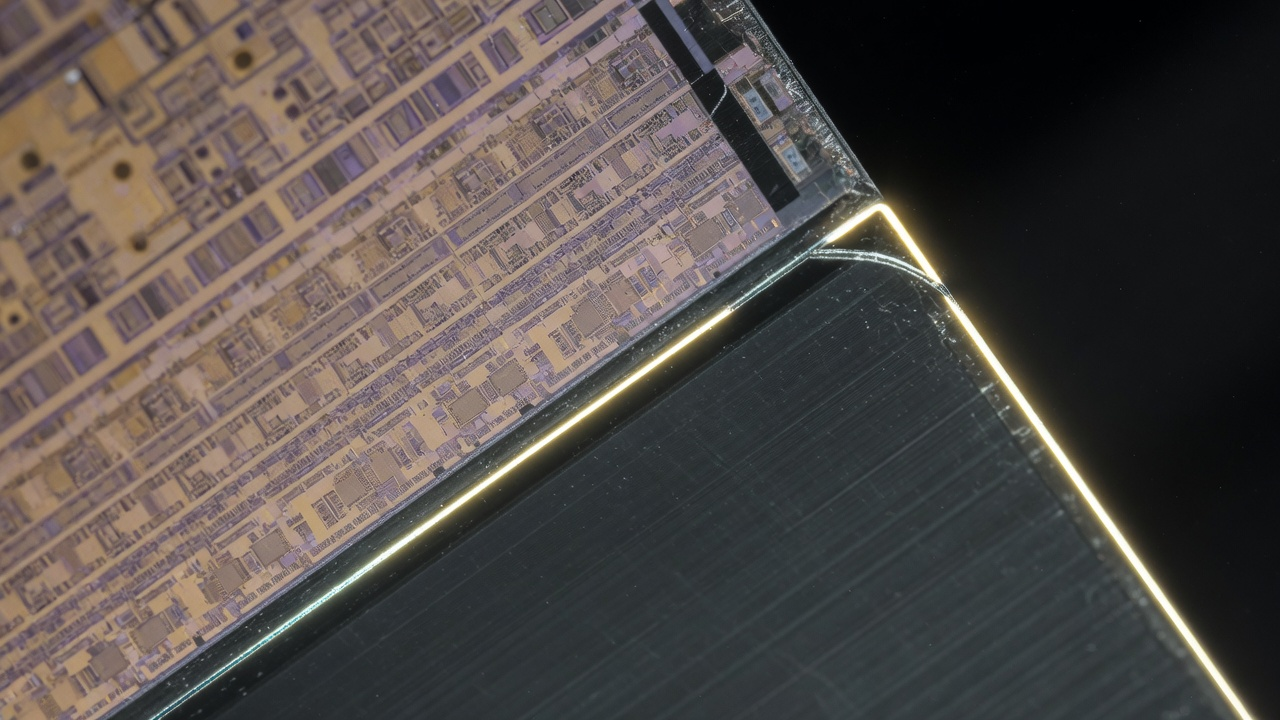
Automated Calibration Raises Spin‑Qubit Gate Fidelity to 99.5%
A team of researchers from Delft University of Technology and QuTech has demonstrated that a unified, automated calibration routine can bring single‑qubit gate fidelity on a six‑dot silicon‑germanium spin‑qubit processor to 99.5 %. The result, reported in a peer‑reviewed article, shows that evolutionary optimization (CMA‑ES) can match or exceed the performance of expert manual tuning across three core operations: readout, electron‑shuttle, and single‑qubit gates.
Evolutionary Optimization Across the Device
The calibration framework treats the processor as a high‑dimensional parameter space. Fourteen voltage‑type variables, barrier and plunger settings, and timing parameters are simultaneously tuned by a Covariance Matrix Adaptation Evolution Strategy (CMA‑ES). The algorithm iteratively evaluates cost functions derived from physical metrics—readout visibility, shuttling coherence, and randomized‑benchmarking (RB) return probability—adjusting parameters to minimize error.
Key observations:
- Readout: Optimized Pauli Spin Blockade (PSB) visibility reaches 99.3 % ± 0.6 %, translating to > 99 % readout fidelity.
- Shuttling: Fidelity over the effective distance improves markedly, with the cost function converging in roughly one hour.
- Single‑qubit gates: Randomized benchmarking yields a 99.5 % average gate fidelity after a 20‑minute automated tune‑up.
The entire calibration sequence—covering all three operations—completes in about 10 hours, comparable to or faster than the time a skilled operator would need.
Why Automation Matters
Semiconductor spin qubits suffer from device‑to‑device variability and complex crosstalk between control lines. Manual tuning therefore becomes a bottleneck as processors scale beyond a handful of dots. By exposing the covariance between variables, the CMA‑ES routine not only finds optimal settings but also highlights which parameters most strongly affect performance (e.g., specific plunger and barrier voltages). This insight can guide future device design and reduce the calibration overhead for larger arrays.
Implications for Scalable Quantum Computing
Achieving > 99 % fidelity on all three primitives is a prerequisite for fault‑tolerant quantum error correction. While the reported numbers pertain to physical qubits, the consistency and speed of the automated approach suggest a viable path toward the larger, more homogeneous control stacks needed for logical‑qubit architectures. Moreover, the method is software‑centric and can be integrated into existing spin‑qubit control stacks, paving the way for routine, on‑device optimization.
Looking Ahead
The study establishes a benchmark for spin‑qubit calibration and invites further work on:
- Extending the routine to multi‑qubit gate calibration.
- Demonstrating reproducibility across different chip designs and fabrication runs.
- Integrating real‑time feedback to adapt to drift during long‑duration experiments.
If these steps succeed, automated calibration could become a standard tool, reducing the expertise barrier and accelerating the deployment of larger semiconductor quantum processors.
--- The findings are detailed in the article “Unified evolutionary optimization for high‑fidelity spin qubit operations” (DOI: http://link.aps.org/doi/10.1103/fl24-s4n7).
Hype check
RealThe paper provides peer‑reviewed data showing 99.5% gate fidelity achieved by an automated CMA‑ES routine; the claim matches the reported results.
- Peer-reviewed paper, or press release only?Paper — DOI link to APS article indicates peer‑reviewed publication
- Error-corrected (logical) qubits, or physical qubits only?Logical / not a qubit claim — Claim concerns gate fidelity, not qubit‑count
- A new milestone, or a rebrand / restatement?New — First report of >99.5% single‑qubit fidelity via automated calibration
- Independent confirmation?Not yet — No external replication mentioned in the input
- Does the headline claim match what the source shows?Matches — Headline accurately reflects the 99.5% gate fidelity result
An editorial assessment of the claim as reported, not a judgment of the company or researchers. How we rate hype →
Source
Read original sourceWhy we picked this
Accepted from curated QuantumUnzipped source (relevance scoring disabled).