SQMS Center team from Fermilab and NYU Langone advance in NIH Quantum Computing Challenge
Fermilab and NYU Langone’s QuantuMRI team advanced to the second phase of the NIH Quantum Computing Challenge with a quantum algorithm that improves MRI tissue simulations, paving the way for faster, more accurate medical imaging.
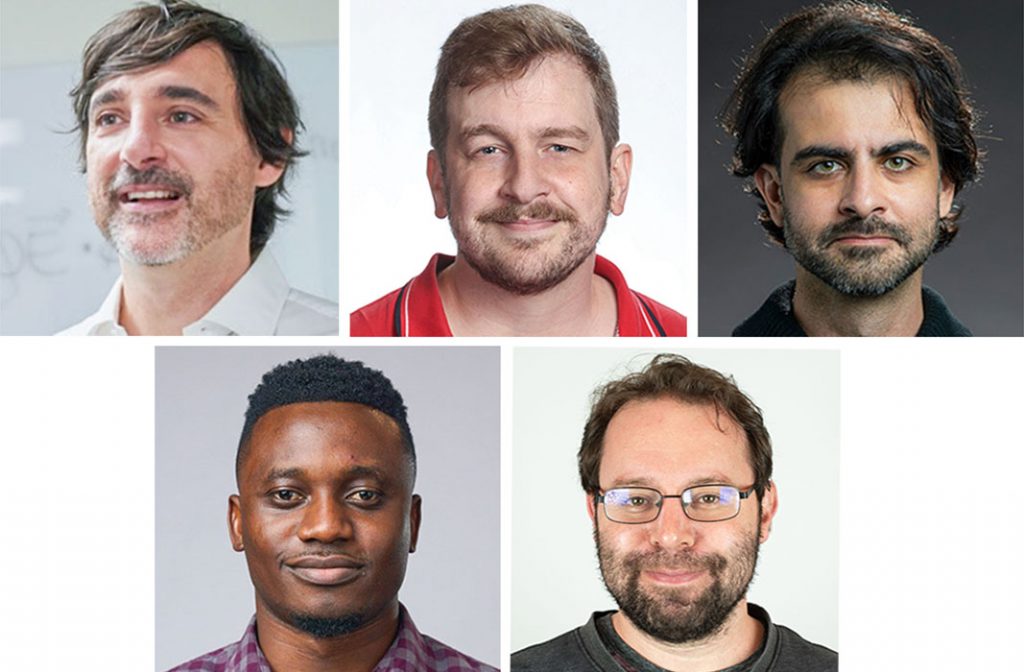
Fermilab‑NYU Langone team advances in NIH Quantum Computing Challenge
The Superconducting Quantum Materials and Systems (SQMS) Center at Fermilab, in partnership with NYU Langone Health, has made a significant stride in the National Institutes of Health (NIH) Quantum Computing Challenge. Their project, QuantuMRI, earned a spot among the top ten submissions and a $10,000 award, propelling the team into the competition’s second phase.
From particle physics to medical imaging
QuantuMRI tackles a longstanding bottleneck in magnetic resonance imaging (MRI): the simulation of how human tissue responds to magnetic fields. Traditional MRI provides detailed anatomical images, but quantitative MRI (qMRI) goes further by measuring relaxation times that reflect tissue biochemistry. Accurately modeling these relaxation processes requires massive computational power, especially when aiming for high spatial resolution and reproducibility.
By leveraging quantum algorithms, the Fermilab‑NYU team has developed a method that can estimate multiple tissue properties simultaneously, with speed and precision unattainable by classical computers. This breakthrough could enable clinicians to detect subtle changes in tissue composition—such as early signs of neurodegenerative disease or tumor heterogeneity—more reliably.
A cross‑disciplinary collaboration
The partnership began in 2022 when NYU Langone joined the SQMS Center’s broader effort to explore quantum‑enhanced data analysis. The SQMS Center brings expertise in building multi‑qubit superconducting processors, while NYU Langone contributes deep clinical insight and access to imaging data. Together, they illustrate how quantum technology can be translated from laboratory experiments to real‑world healthcare applications.
Professor Riccardo Lattanzi, director of NYU’s Center for Biomedical Imaging, emphasized the project’s potential: “This collaboration shows how quantum technologies can transform medical imaging and accelerate the clinical translation of qMRI, helping doctors make better decisions and moving us closer to precise, personalized medicine.”
What’s next in the NIH challenge?
The NIH Quantum Computing Challenge is designed to spur innovative solutions that can be applied to biomedical problems. In the second phase, finalists will further test and demonstrate their algorithms in clinical and biomedical contexts. The QuantuMRI team plans to refine their quantum simulations, validate them against patient data, and explore scalability on larger quantum processors.
Zachary Goff‑Eldredge, a program manager in the DOE Office of High Energy Physics, praised the team’s interdisciplinary approach: “It’s inspiring to see a team like Fermilab‑NYU bring bold, cross‑disciplinary thinking to such an important area of biomedical research.”
Broader impact on quantum research
This achievement underscores the growing role of quantum computing in fields beyond physics. By tackling a concrete medical imaging challenge, the QuantuMRI project demonstrates how quantum algorithms can deliver tangible benefits in diagnostics and personalized medicine. It also highlights the importance of collaborative networks—spanning national labs, universities, and industry—to accelerate the transition from quantum research to real‑world applications.
As the NIH challenge moves toward its 2027 conclusion, the Fermilab‑NYU team’s progress will serve as a benchmark for future quantum‑healthcare initiatives. Their work exemplifies how cutting‑edge physics can be harnessed to improve patient care, paving the way for a new era of quantum‑enhanced medical technology.
---
TL;DR: Fermilab and NYU Langone’s QuantuMRI team advanced to the second phase of the NIH Quantum Computing Challenge by developing a quantum algorithm that simulates tissue behavior in MRI, promising faster, more accurate quantitative imaging for medical diagnostics.
Source
Read original sourceWhy we picked this
Accepted from curated QuantumUnzipped source (relevance scoring disabled).