Stony Brook Quantum Memory Named to TIME’s Best Inventions of 2026
Stony Brook’s room‑temperature quantum memory, commercialized as Qu‑MEM by Qunnect, has earned a spot on TIME’s Best Inventions of 2026, highlighting the university’s role in advancing practical quantum networking.
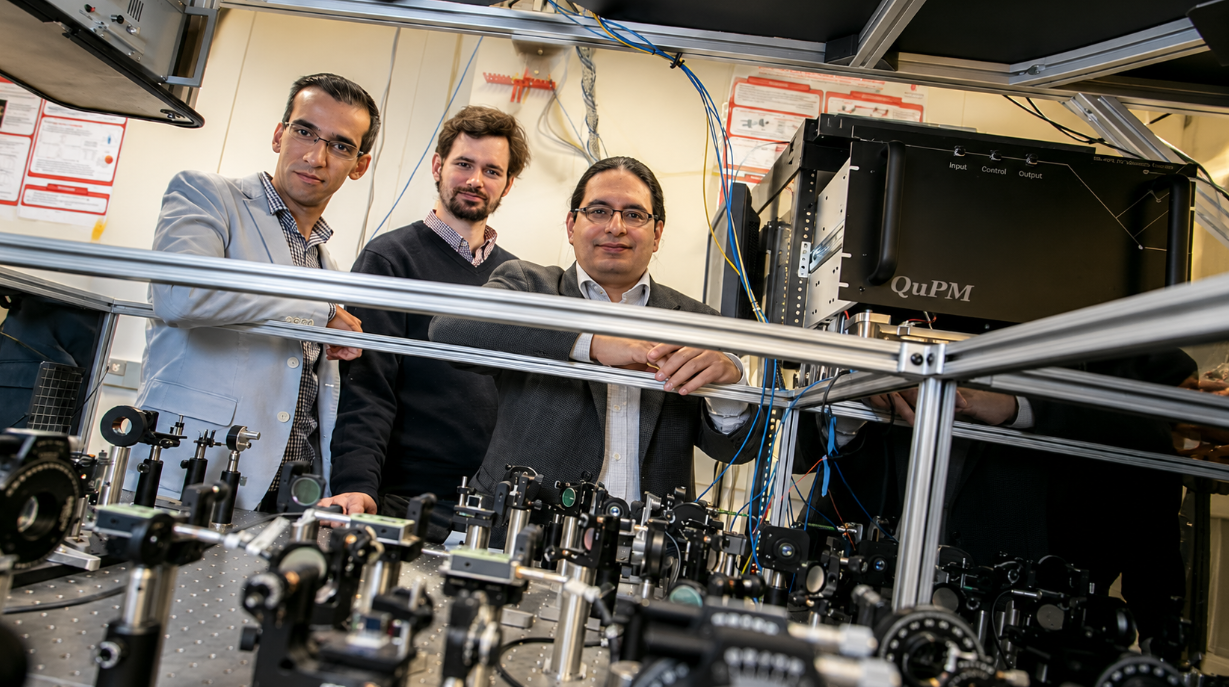
Stony Brook Quantum Memory Earns TIME’s 2026 Best Invention Honor
Stony Brook University’s patented quantum‑memory technology, now sold commercially as Qu‑MEM by the spin‑out company Qunnect, has been named to TIME’s Best Inventions of 2026 list in the Experimental category. The accolade underscores the transition of a university‑originated breakthrough—from a basement lab at Stony Brook’s physics department—to a market‑ready component that could become a cornerstone of future quantum networks.
---
From Lab Discovery to Commercial Device
The core of Qu‑MEM is a room‑temperature, warm‑vapor neutral‑atom quantum memory that can store and retrieve quantum information on demand. Unlike earlier quantum memories that required cryogenic environments, Qu‑MEM operates in a standard server rack and integrates with existing fiber‑optic infrastructure. This design addresses a major scalability hurdle for quantum networking: the need for repeatable, low‑loss storage nodes that can be deployed alongside conventional telecom hardware.
Research led by Professor Eden Figueroa, Stony Brook’s Endowed Presidential Professor of Physics and director of the Stony Brook University Quantum Institute, together with former graduate students Mehdi Namazi (PhD ’18) and Mael Flament (MS ’19), laid the scientific foundation. The team’s work was patented by the university and licensed to Qunnect, where Namazi now serves as Chief Science Officer and Flament as Chief Technology Officer. Their collaboration illustrates a textbook pathway from academic discovery to commercial technology.
---
Building the Quantum Internet
Qu‑MEM is already being installed on quantum‑network testbeds in New York, Long Island, and Europe. It forms a critical element of Stony Brook’s SCY‑QNET, the nation’s largest metropolitan‑scale quantum internet testbed, which interconnects academic, government, and private‑sector nodes via entangled photons. By enabling on‑demand storage of quantum states, Qu‑MEM helps bridge the distance gaps that currently limit quantum‑communication range, paving the way for quantum repeaters and ultimately a scalable quantum internet.
The broader ecosystem benefits from substantial public investment: more than $300 million from New York State and the National Science Foundation supports the testbed and related research. Partnerships with Brookhaven National Laboratory, SUNY colleges, and institutions such as Yale and Columbia further expand the network’s reach and demonstrate the collaborative model that drives quantum‑technology development.
---
Why the Recognition Matters
TIME’s Best Inventions list highlights innovations that are expected to make a lasting impact. Qu‑MEM’s inclusion signals that the technology is not only scientifically novel but also commercially viable and strategically important. The recognition also shines a spotlight on Stony Brook University as a hub for quantum research, reinforcing the value of sustained state and federal funding for high‑risk, high‑reward science.
University leaders, including SUNY Chancellor John B. King Jr. and Stony Brook President Andrea Goldsmith, have emphasized how the award validates the university’s investment in quantum research and its ability to translate discoveries into market‑ready products. The accolade serves as a public endorsement of the university’s broader mission to foster an ecosystem where faculty, students, alumni, and industry partners co‑create technologies that address real‑world challenges.
---
Looking Ahead
The next steps for Qu‑MEM involve scaling production, expanding deployment across additional testbeds, and integrating the memory into quantum‑repeaters that will link distant quantum computers and sensors. As the technology matures, it could enable secure, unhackable communications for sectors such as healthcare, finance, and national defense—applications that rely on the inherent security of quantum information.
For observers of the quantum‑technology market, Qu‑MEM’s rise illustrates a broader trend: room‑temperature quantum devices are moving from the laboratory toward commercial viability, reducing the cost and complexity of building quantum infrastructure. The TIME recognition not only celebrates a single invention but also signals a turning point for the industry, where practical, deployable quantum components begin to form the backbone of the emerging quantum internet.
---
The quantum community will be watching closely as Qu‑MEM transitions from prototype to production, and as Stony Brook’s research ecosystem continues to nurture the next generation of quantum breakthroughs.
Source
Read original sourceWhy we picked this
Accepted from curated QuantumUnzipped source (relevance scoring disabled).