Taiyi Quantum Surpasses ¥1 Billion RMB ($149.6M+ USD) in Cumulative Funding for Ytterbium Neutral-Atom Systems
Taiyi Quantum has raised over ¥1 billion RMB (~$150 M) in its first nine months, positioning its ytterbium neutral‑atom platform as a unicorn‑valued contender for fault‑tolerant quantum computing.
Introduction
Shanghai‑based Taiyi Quantum has announced that cumulative financing now exceeds ¥1 billion RMB (approximately $150 million USD). The milestone comes less than a year after the company’s founding in January 2026 and marks its transition to unicorn‑valuation status. The latest round was led by existing shareholder Huakong Fund and included a mix of state‑backed and industry‑focused venture firms.
Funding Landscape and Investor Profile
The financing trajectory builds on a March angel round of ¥100 million and a June pre‑A round of ¥300 million. The current round adds a further ¥600 million‑plus, pushing total capital raised past the ¥1 billion threshold. Participants span a range of strategic investors:
- Huakong Fund – Tsinghua‑affiliated, lead investor.
- Jinqiu Fund, Chengdu High‑Tech Zone Vision Fund, Yunbai Capital, Lingang Frontier Investment, Hongruida Investment, Hengxu Capital, Boyuan Capital, Gaomai Capital, and Yaru Capital – all of which have shown interest in deep‑tech, AI, automotive, and electronics applications of quantum hardware.
The breadth of backing underscores confidence in Taiyi’s full‑stack approach and its focus on a hardware platform that promises scalability beyond the typical physical‑qubit count metrics.
Technical Strategy: Ytterbium Neutral‑Atom Arrays
Taiyi’s core technology centers on neutral‑atom arrays of ytterbium‑171 (¹⁷¹Yb). The platform leverages:
- Nuclear‑spin clock states for long coherence times.
- Erasure‑conversion error channels that enable native detection of certain error types, simplifying fault‑tolerant protocols.
- High‑precision multi‑qubit entangling gates driven by narrow‑linewidth lasers and optical tweezers.
Key engineering achievements reported within the first six months include:
- Real‑time control latency under 10 µs, achieved through a closed loop of camera feedback, FPGA/GPU processing, and dynamic tweezer repositioning.
- Open‑source LUOSHU compiler, tailored for neutral‑atom movement, dynamic connectivity, and gate scheduling.
- Design target of 100 logical qubits with fault‑tolerant error correction, shifting the focus from raw physical qubit counts to usable logical capacity.
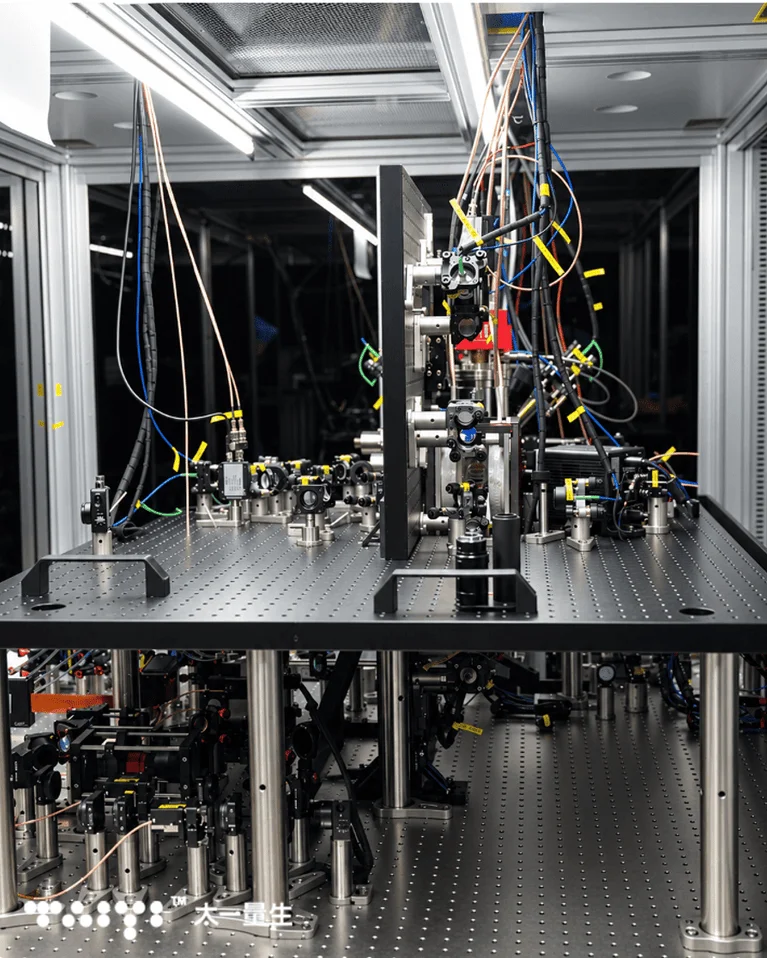
The company’s staffing has grown to nearly 100 engineers and researchers recruited from leading institutions such as MIT, Cambridge, UPenn, LMU Munich, Tsinghua, and the Chinese Quantum Team (CQT) in Singapore. This multidisciplinary team supports the integration of vacuum systems, laser sources, optical tweezers, and imaging subsystems into a single quantum processing unit (QPU).
Market Implications and Outlook
Taiyi’s rapid capital accumulation and technical milestones place it among the few Chinese startups that have achieved unicorn status in the quantum hardware sector. The focus on neutral‑atom technology differentiates it from superconducting and trapped‑ion competitors, offering a pathway to scalable, fault‑tolerant architectures with potentially lower overhead for error correction.
For investors and industry observers, Taiyi’s progress signals:
- Growing confidence in neutral‑atom platforms as viable candidates for large‑scale quantum computing.
- Strategic alignment with state‑backed funds, suggesting potential support for future manufacturing and deployment within China’s broader quantum roadmap.
- A benchmark for capital efficiency, as the company moved from seed to unicorn valuation in under a year while delivering a functional QPU prototype.
Conclusion
Taiyi Quantum’s crossing of the ¥1 billion RMB funding mark reflects both strong investor belief and tangible technical progress in ytterbium neutral‑atom quantum computing. As the company advances toward its 100‑logical‑qubit fault‑tolerant target, it will be a key player to watch in the global race for scalable quantum hardware.
Source
Read original sourceWhy we picked this
Accepted from curated QuantumUnzipped source (relevance scoring disabled).