Technology companies join forces to boost scientific discovery and quantum scale-up
Quantum Design’s acquisition of Oxford Instruments NanoScience creates a trans‑Atlantic leader in cryogenic and measurement technology, accelerating quantum‑computer scale‑up and scientific discovery.
Quantum Design + Oxford Instruments NanoScience: A New Force for Quantum Scale‑up
The recent merger of Quantum Design, a US‑based scientific‑instrument maker, with Oxford Instruments’ NanoScience division has produced a single, globally‑networked supplier of ultra‑low‑temperature and high‑field measurement systems. By combining Quantum Design’s broad sales reach and customer‑service reputation with Oxford’s expertise in dilution refrigeration and superconducting magnets, the new entity—Quantum Design Oxford—offers a powerful platform for both academic research and commercial quantum‑computing deployments.
A Unified Cryogenic Portfolio
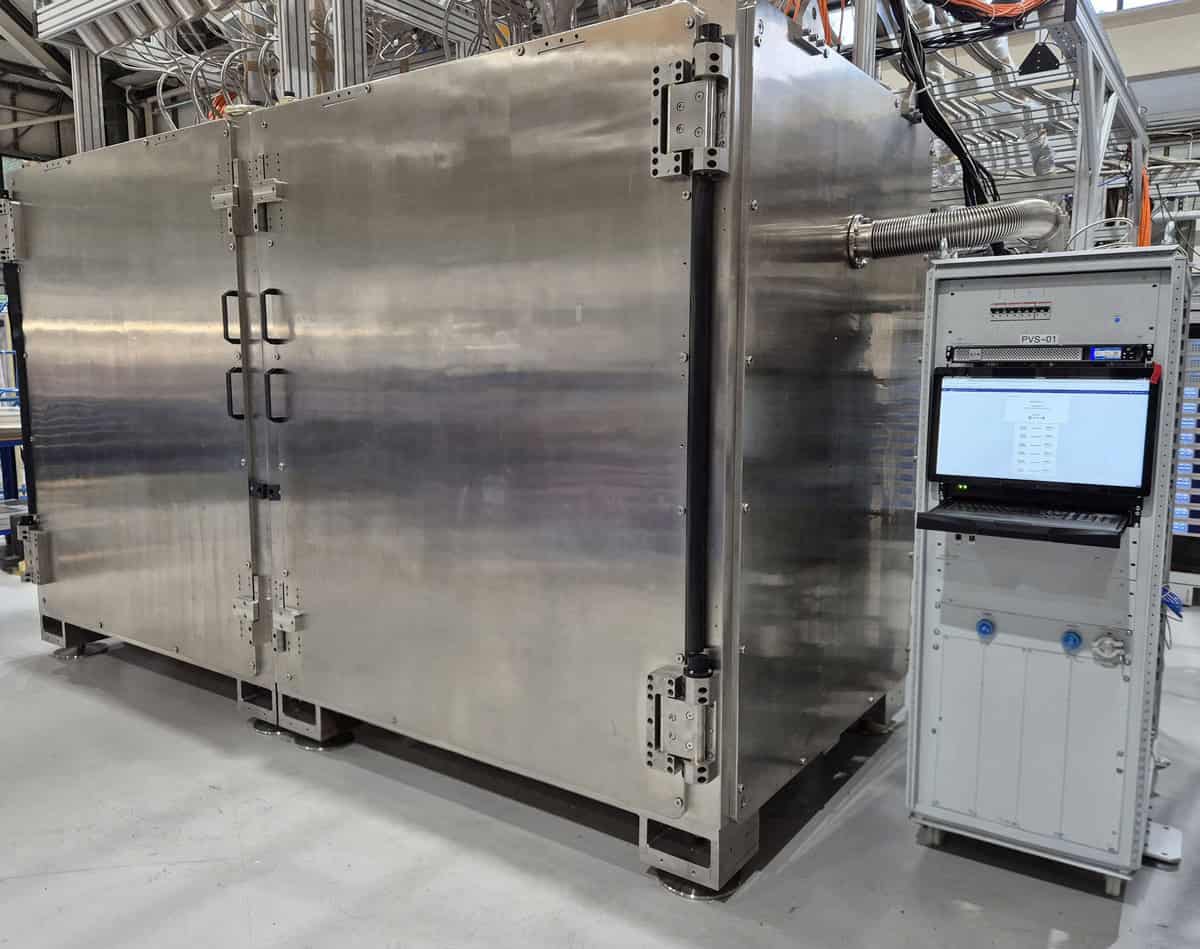
- Large‑scale dilution refrigerators – The Proteox ® QX series can now be linked to create a 3 m² cold platform operating below 10 mK, a temperature regime essential for superconducting and spin‑qubit processors.
- High‑field superconducting magnets – Up to 20 T magnets are available for probing material properties, enabling advanced spectroscopy and quantum‑material studies.
- Integrated measurement suites – Automated protocols for electrical, magnetic, and thermal characterization are bundled with flexible user‑defined experiment design, reducing setup time for complex quantum‑hardware tests.
These capabilities address a critical bottleneck: the need for reliable, repeatable cryogenic environments that can be deployed at scale, whether in university labs or in commercial quantum‑data‑centres.
Leveraging a Dual‑National Footprint
The combined company retains a UK‑domiciled legal entity while benefiting from US ownership. This structure:
- Meets sovereign‑technology mandates in both the United Kingdom and the United States, preserving access to government‑funded research programmes and defence contracts.
- Expands the customer base by allowing sales into US federal agencies and UK national‑security projects that were previously off‑limits.
- Keeps R&D in the UK, maintaining collaborations with Innovate UK, the UK research councils, and university labs that drive fundamental low‑temperature physics.
Accelerating Commercial Quantum Deployments
Quantum Design Oxford has already supplied cryogenic platforms to OQC, a full‑stack quantum‑computing provider operating data‑centre nodes in London, Tokyo, and New York. By integrating dilution refrigerators directly into these sites, OQC can offer stable, cloud‑accessible quantum resources—an early example of “quantum‑computing‑as‑a‑service.”
Key commercial advantages include:
- Local expert support – Regional service teams reduce downtime, a crucial factor for enterprises that rely on continuous quantum‑resource availability.
- Shorter lead times – New investment in the UK manufacturing facility streamlines production, enabling faster delivery of custom cryogenic rigs.
- Scalable architecture – The ability to connect multiple QX units creates modular platforms that grow with a client’s qubit count, supporting the transition from prototype to utility‑scale quantum computers.
Looking Beyond 2030: Fundamental Research Needs
While current cryogenic technology can sustain the quantum hardware road‑map through roughly 2030, the community anticipates a next wave of challenges:
- Cryo‑electronic components that operate directly at millikelvin temperatures, reducing thermal load and improving signal fidelity.
- New low‑temperature materials for higher‑coherence qubits and alternative modalities such as topological or photonic qubits.
- Re‑investment in university‑level low‑temperature labs to explore novel cooling techniques and liquid‑helium alternatives.
Quantum Design Oxford is positioning itself as a conduit between fundamental research and industrial application, funding university projects and co‑developing tools that probe matter under extreme conditions.
---
Practical take‑away: The Quantum Design‑Oxford partnership illustrates how strategic mergers can bridge the gap between cutting‑edge physics research and the commercial scaling of quantum computers. By uniting world‑class cryogenic hardware, a global support network, and a commitment to fundamental low‑temperature science, the new company is poised to accelerate the arrival of quantum‑utility platforms while ensuring the underlying technology remains robust, reliable, and accessible.
Source
Read original sourceWhy we picked this
Accepted from curated QuantumUnzipped source (relevance scoring disabled).