The Case for a Bubble at Life’s Start
The lipid‑first hypothesis argues that early life needed membrane‑bound bubbles to concentrate chemistry and enable primitive evolution.
The Case for a Bubble at Life’s Start
Introduction
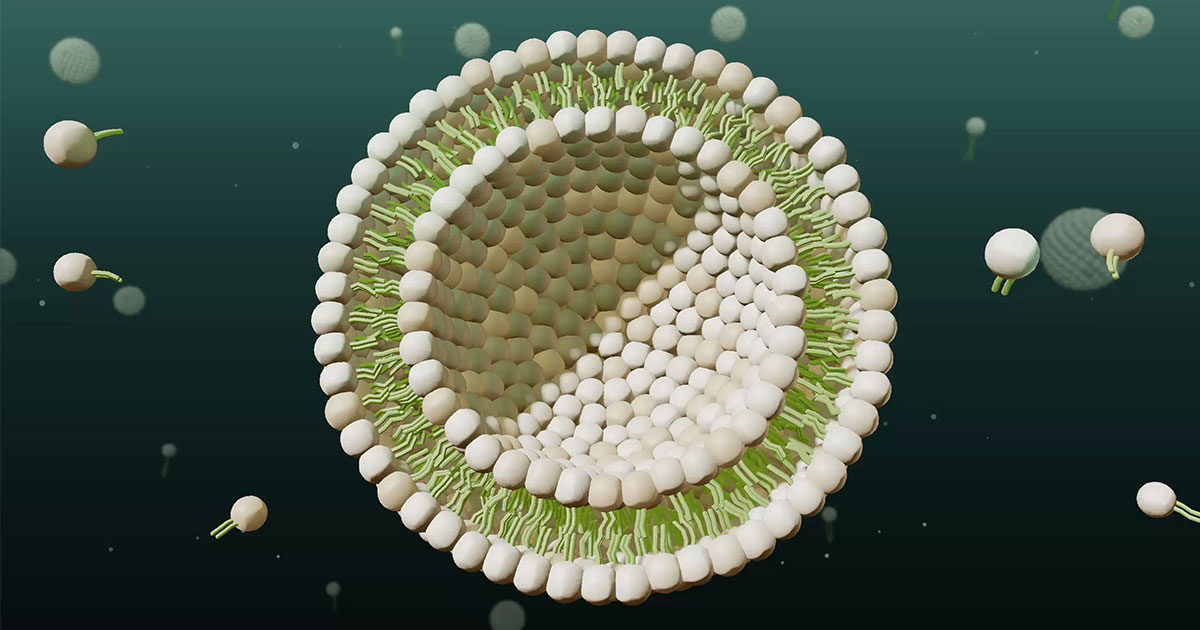
The origin of life remains one of science’s most profound mysteries. One influential idea, the lipid‑first hypothesis, proposes that the first living systems were enclosed in simple membrane bubbles. These compartments would have gathered reactants, allowed chemical networks to persist, and even supported a primitive form of evolution.
Why a Boundary Matters
All modern cells are essentially bubbles of chemistry sealed by a lipid membrane. Even though today’s membranes are built and maintained by sophisticated pathways, the basic principle is the same: a physical barrier concentrates molecules and protects them from the surrounding environment. Without such a boundary, pre‑biotic chemistry would be too dilute for complex reaction networks to arise.
From Computer Models to Experimental Questions
In the early 2000s, Doron Lancet and Daniel Segrè used a computational model to test whether lipid bubbles could inherit compositional information, compete, and evolve. Their simulations showed that if a bubble contains two mutually catalytic molecules (A and B), the system can maintain a stable internal composition, split, and pass a mixture of A and B to daughter bubbles. Random “mutations”—the occasional introduction of a third molecule C—could shift the internal chemistry, giving faster‑growing bubbles a selective advantage.
The model sparked debate. Critics, including Nobel laureate Jack Szostak, point out that experimental evidence for lipid‑based evolution is lacking and that the synthesis of primitive lipids on early Earth is poorly understood. A 2010 analysis further argued that compositional inheritance would be too error‑prone for natural selection to act effectively.
Expanding the Scope: Beyond Lipids
Researchers now explore alternative compartment types. Mineral walls (e.g., iron sulfides) and coacervate droplets have been proposed as non‑membrane containers. Nevertheless, Bruce Damer and David Deamer continue to investigate lipid bubbles, focusing on hot‑spring environments where repeated drying and refilling could concentrate lipids and drive chemical complexity.
The Ongoing Debate
The lipid‑first hypothesis is not a monolithic theory; it has evolved alongside competing ideas such as the RNA world. While many scientists agree that some form of compartmentalization was essential, they differ on the material and mechanisms involved. The discussion highlights the interdisciplinary nature of origins‑of‑life research, blending chemistry, geology, computational modeling, and evolutionary theory.
Conclusion
Whether life began inside a lipid bubble, a mineral cavity, or a coacervate droplet, the need for a physical boundary appears central. Future experiments that recreate plausible pre‑biotic conditions and test the ability of simple compartments to support self‑sustaining chemistry will be crucial for assessing the lipid‑first hypothesis and its role in the story of life’s emergence.
Hype check
Not a research claimThe article reports on scientific debate and hypotheses, not a new experimental result; there is no concrete breakthrough to evaluate.
We rate research and technical results only. How we rate hype →
Source
Read original sourceWhy we picked this
Accepted from curated QuantumUnzipped source (relevance scoring disabled).