The Incredible, Elegant DNA Repair System Makes Gene Editing Work
DNA’s natural repair mechanisms are the foundation that makes modern gene‑editing technologies like CRISPR work.
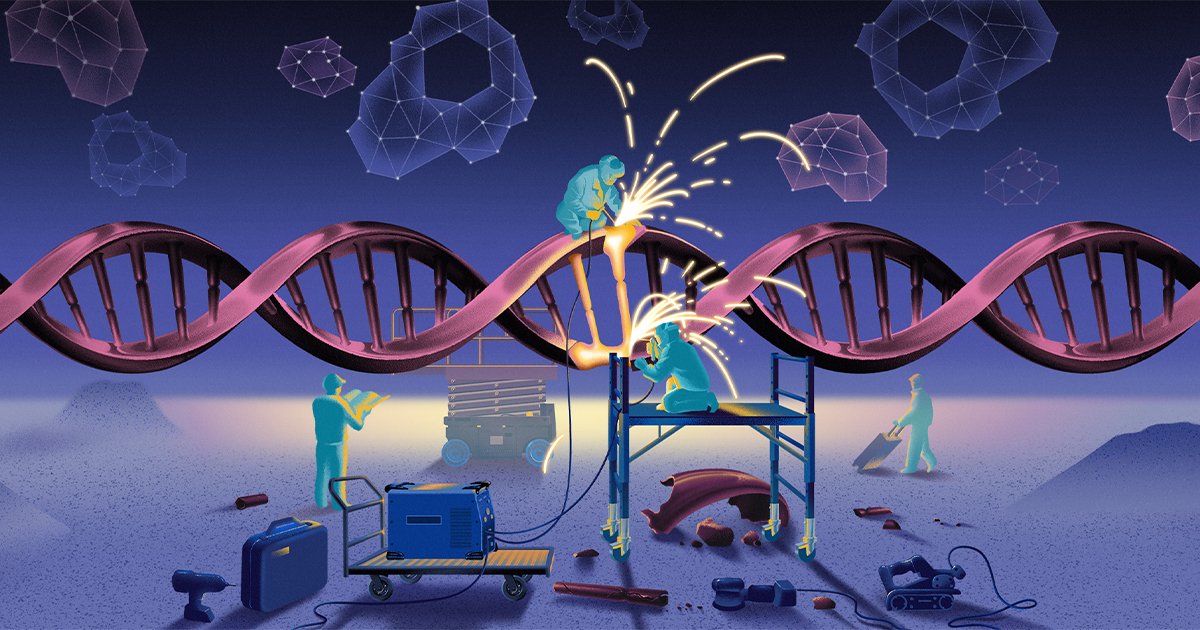
The Elegant DNA Repair System Behind Gene Editing
Introduction
Every cell carries a massive, delicate instruction manual – its genome. While the double‑helix looks sturdy, it is constantly assaulted by metabolic by‑products, radiation, chemicals, and more. To keep life viable, cells have evolved a suite of repair pathways that constantly scan, recognize, and fix damage. Gene‑editing tools such as CRISPR‑Cas simply create a controlled break and then let the cell’s own repair machinery do the heavy lifting.
Why DNA Needs Constant Repair
- Daily onslaught – Estimates suggest a typical human cell experiences up to 100,000 lesions per day, ranging from single‑base modifications to full double‑strand breaks.
- Structural vulnerability – The hydrogen bonds that hold the two strands together are intentionally weak, allowing enzymes to open the helix for transcription and replication, but also making the molecule prone to breakage.
- Consequences of damage – Unrepaired lesions can lead to mutations, cell death, or cancer. The cell therefore prioritizes rapid detection and correction.
The Core Repair Pathways
- Base Excision Repair (BER) – Targets small, chemically altered bases. Specialized enzymes excise the faulty nucleotide and replace it using the complementary strand as a template.
- Nucleotide Excision Repair (NER) – Handles bulkier distortions, such as UV‑induced thymine dimers. A short stretch of nucleotides is removed and resynthesized.
- Non‑Homologous End Joining (NHEJ) – The quick‑and‑dirty fix for double‑strand breaks. The broken ends are trimmed and ligated, often introducing small insertions or deletions.
- Homologous Recombination (HR) – A high‑fidelity repair that uses a sister chromatid as a template. It operates only during the S/G2 phases of the cell cycle when a duplicate copy is available.
Turning Repair Into a Gene‑Editing Tool
The breakthrough that turned DNA repair into a laboratory technique came in 1994 when Maria Jasin’s group showed that a deliberately induced double‑strand break dramatically increased the efficiency of inserting a new gene via homologous recombination. The limitation was the need for a custom endonuclease for each target site.
The advent of CRISPR‑Cas in 2012 solved that bottleneck. The Cas nuclease is guided by a short RNA molecule, allowing researchers to program cuts at virtually any genomic location. After the cut, the cell’s own repair pathways – either NHEJ (for knock‑outs) or HR (for precise insertions) – seal the break, incorporating the desired edit.
Emerging Variants
- Base editing modifies a single nucleotide without creating a double‑strand break, reducing the reliance on error‑prone NHEJ.
- Prime editing expands the range of possible edits while still leveraging the cell’s repair machinery.
Looking Ahead
Understanding the nuances of each repair pathway is crucial for improving precision, reducing off‑target effects, and expanding the therapeutic potential of gene editing. As researchers continue to map the 500‑plus proteins involved in the DNA damage response, new strategies will emerge that can coax cells toward the most accurate repair route, making gene therapy safer and more efficient.
Practical Takeaway
When evaluating any gene‑editing approach, ask: Which cellular repair pathway does the method rely on, and how can we bias the cell toward the most accurate outcome? The answer lies in the elegant, ancient DNA repair system that has kept life thriving for billions of years.
Source
Read original sourceWhy we picked this
Accepted from curated QuantumUnzipped source (relevance scoring disabled).