Thermodynamic probes bypass limits on measuring entanglement in quantum systems
A new thermodynamic framework uses ergotropy to quantify multipartite entanglement in strongly interacting quantum systems.
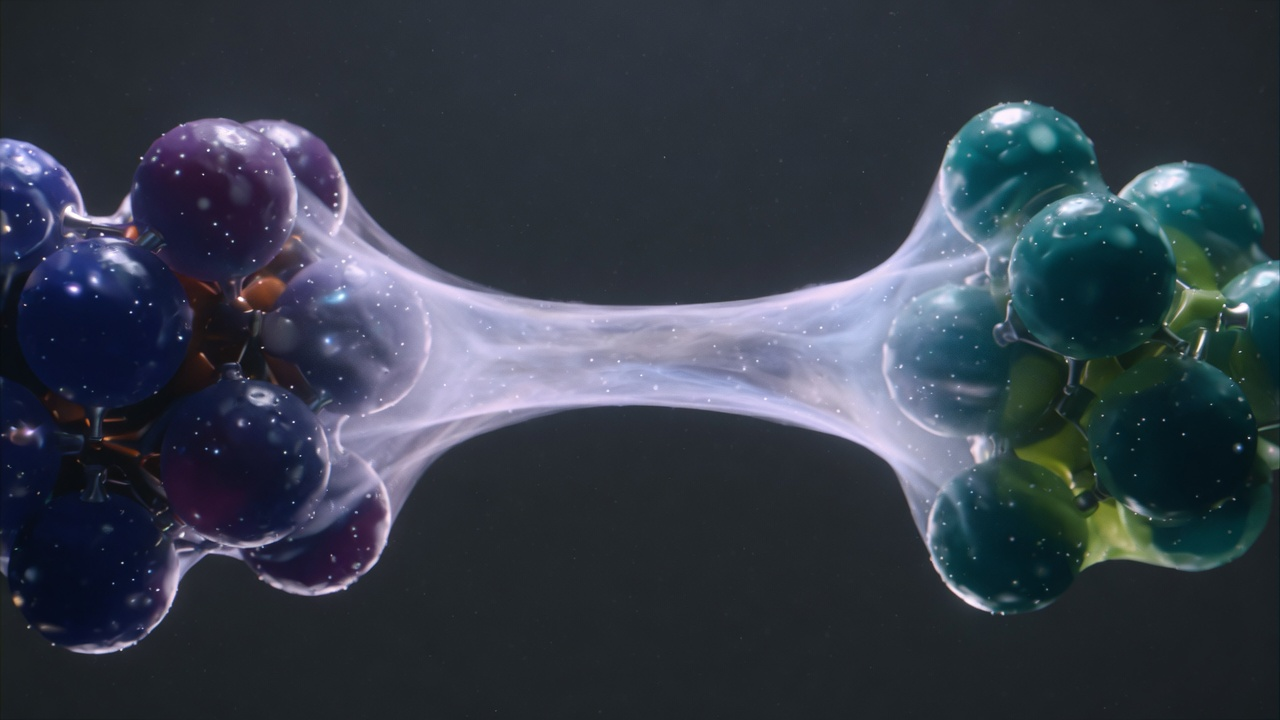
Thermodynamic Probes Offer a Fresh Way to Measure Quantum Entanglement
Entanglement lies at the heart of quantum technologies, yet reliably quantifying it in large, interacting systems has remained a stubborn challenge. A recent study by researchers at the Indian Institute of Technology Bombay and the S. N. Bose National Centre for Basic Sciences proposes a thermodynamic shortcut: measuring ergotropy, the maximum extractable work from an isolated quantum system, to infer multipartite entanglement.
From Work Extraction to Correlation Quantification
Traditional entanglement metrics often demand full state tomography—a process that scales exponentially with the number of particles and quickly becomes infeasible. The new framework sidesteps this bottleneck by focusing on two experimentally accessible routes:
- Controlled quenching – rapidly switching interaction strengths and observing the system’s energetic response.
- Local observable measurements – extracting specific local properties without reconstructing the global state.
Both approaches yield the ergotropic gap, the difference between global and local ergotropy. The authors show that this gap directly maps onto a quantity they call the ergotropic volume, which serves as a quantitative marker of genuine multipartite entanglement (GME).
Demonstrations on Canonical Models
To validate the method, the team simulated three well‑known many‑body models:
- The Tavis‑Cummings model (collective light‑matter interaction),
- The three‑level Dicke model (superradiant phase transitions), and
- The transverse‑field Ising model (quantum magnetism).
In each case, the ergotropic‑based estimates matched established geometric entanglement measures, even when the underlying states were strongly correlated or time‑dependent. Notably, the framework remained robust under simulated noise, suggesting practical relevance for noisy intermediate‑scale quantum (NISQ) devices.
From Theory to Quantum Circuits
Beyond abstract models, the authors translated the protocol into a variational quantum algorithm that can be run on existing quantum processors. By embedding ergotropy estimation into a quantum circuit, they demonstrated how near‑term hardware could certify GME without exhaustive tomography. This circuit‑level formulation aligns with current experimental capabilities in trapped‑ion, superconducting, and neutral‑atom platforms, where rapid interaction tuning or precise local measurements are already routine.
Why This Matters
Accurate entanglement diagnostics are essential for:
- Benchmarking quantum simulators – confirming that the simulated dynamics truly capture many‑body correlations.
- Validating NISQ algorithms – ensuring that noisy devices still generate the required entangled resources.
- Designing thermodynamic quantum protocols – leveraging work extraction as a resource for communication and computation.
By linking a thermodynamic observable to quantum correlations, the work opens a pathway for operational entanglement assessment that is both experimentally tractable and theoretically sound.
Looking Ahead
The study invites several next steps: experimental implementation on real hardware, extension to higher‑dimensional systems, and exploration of how ergotropy‑based measures interact with error‑mitigation techniques. If successful, thermodynamic probes could become a standard tool in the quantum engineer’s toolbox, simplifying the verification of ever‑larger quantum devices.
--- The article is based on the research brief describing the new ergotropy‑based entanglement framework.
Hype check
PartlyThe claim is a novel research result but lacks a peer‑reviewed paper or external verification, so the evidence is incomplete.
- Peer-reviewed paper, or press release only?Press release only — No paper or preprint is cited in the brief.
- Error-corrected (logical) qubits, or physical qubits only?Logical / not a qubit claim — The story does not involve qubit‑count claims.
- A new milestone, or a rebrand / restatement?New — Introduces a new thermodynamic method for entanglement measurement.
- Independent confirmation?Not yet — No external confirmation or replication is mentioned.
- Does the headline claim match what the source shows?Matches — Headline accurately reflects the described framework.
An editorial assessment of the claim as reported, not a judgment of the company or researchers. How we rate hype →
Source
Read original sourceWhy we picked this
Accepted from curated QuantumUnzipped source (relevance scoring disabled).