Three Lincoln Laboratory technologies receive 2026 R&D 100 Awards
MIT Lincoln Laboratory won three 2026 R&D 100 Awards for a secure OS, a quantum wafer‑scale platform, and a 5G interference‑cancellation algorithm.
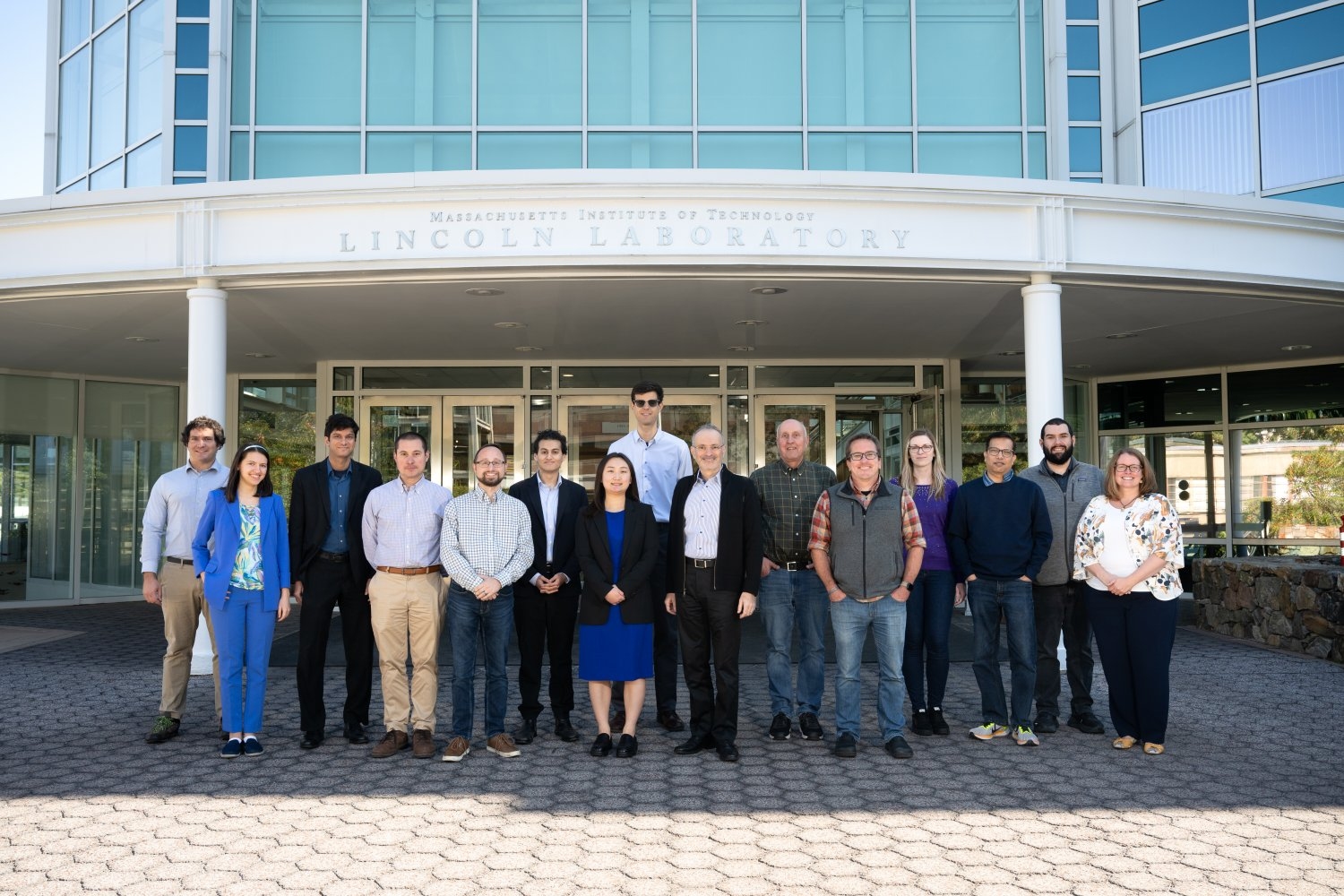
MIT Lincoln Laboratory’s Triple R&D 100 Triumph
MIT Lincoln Laboratory announced that three of its technologies have been honored with 2026 R&D 100 Awards, a distinction that highlights the most significant innovations that have moved toward commercial or governmental use. The award‑winning suite spans three strategic domains: cybersecurity for embedded systems, system‑level integration for quantum and high‑performance computing, and advanced signal processing for 5G communications.
Magnetite: A Secure‑by‑Design Operating System
Embedded computers in satellites, drones, and radar platforms are increasingly targeted by sophisticated cyber threats. Lincoln Laboratory’s response is Magnetite, an operating system built on the formally verified seL4 microkernel and written largely in Rust. Formal verification guarantees that the kernel’s code behaves exactly as specified, eliminating a class of vulnerabilities at the foundation. Rust’s memory‑safety features further protect higher‑level services from common bugs such as buffer overflows. Magnetite isolates OS services as least‑privilege processes, so a breach in one component does not compromise the entire system. The OS is freely available for government use and approved partners, and it is already being integrated into space and flight platforms.
Quantum Microsystems Platform: Wafer‑Scale Integration
Traditional quantum‑computing hardware suffers from bulky interconnects that link cryogenic superconducting chips to room‑temperature control electronics. The Quantum Microsystems platform tackles this bottleneck by integrating hundreds of superconducting and semiconductor chips onto a single wafer. An AI‑driven decision tree optimizes routing, while digital lithography draws custom wiring layers that bypass defective regions. Microbump and bumpless bonding place chips in close proximity, and a superconducting fabric carries signals across the wafer at near‑light speed, eliminating most coaxial cabling. The platform is reworkable, allowing individual chiplets to be swapped without rebuilding the entire system, and it targets both government and commercial foundries.
5G Interference‑Cancellation Algorithm
The proliferation of 5G base stations creates unintended interference for nearby RF systems such as military radars and satellite ground stations. Lincoln Laboratory’s algorithm isolates the 5G waveform—whose structure is defined by international standards—reconstructs the interfering signal, and subtracts it from the received data on a per‑antenna basis. Field tests at Hill Air Force Base using a Nokia 5G base station demonstrated a recovery of radar signals to within 2 dB of their original signal‑to‑noise ratio, preserving roughly 89 % of the interference‑free detection range. The technique does not rely on spatial beamforming, preserving antenna resources for other tasks, and it is expected to extend to future 6G waveforms.
Looking Ahead
These awards underscore Lincoln Laboratory’s role in translating cutting‑edge research into practical technologies that enhance national security and scientific capability. Magnetite offers a reusable security foundation for mission‑critical embedded systems, the Quantum Microsystems platform promises a new paradigm for scaling quantum and AI hardware, and the 5G cancellation algorithm provides a robust solution to emerging spectrum‑sharing challenges. As the Department of War evaluates these innovations for broader deployment, they illustrate how interdisciplinary research—spanning formal methods, AI‑driven design, and signal processing—can produce tangible, high‑impact outcomes.
--- This article is based on MIT News coverage of the 2026 R&D 100 Awards and does not contain proprietary or classified details.
Hype check
Not a research claimThe story reports award recognitions, not a technical result to evaluate; there is no research claim to verify.
We rate research and technical results only. How we rate hype →
Source
Read original sourceWhy we picked this
Accepted from curated QuantumUnzipped source (relevance scoring disabled).