Toshiba Launches Modular QSN Platform to Scale Hybrid QKD and PQC Across Lit Fiber Networks
Toshiba’s new modular Quantum‑Safe Networking (QSN) platform lets quantum‑key distribution and post‑quantum cryptography share lit fiber, cutting costs and scaling secure communications for carriers and enterprises.
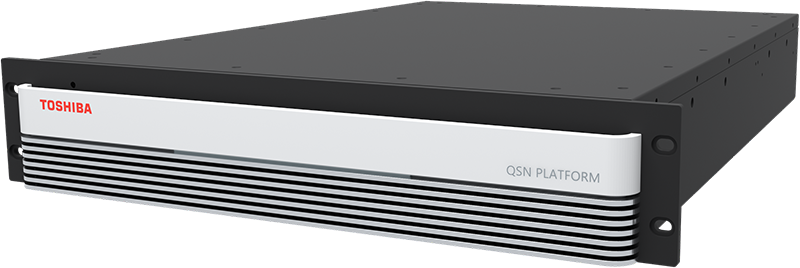
Toshiba’s Modular QSN Platform: Quantum‑Safe Networking on Lit Fiber
Toshiba has unveiled a carrier‑grade Quantum‑Safe Networking (QSN) platform that combines hardware‑level Quantum Key Distribution (QKD) and Quantum Random Number Generation (QRNG) with algorithmic Post‑Quantum Cryptography (PQC). By using active optical switching and dense‑wavelength‑division multiplexing (DWDM), the system can run quantum‑secured channels alongside high‑capacity classical traffic on existing lit fiber, eliminating the need for expensive dark‑fiber point‑to‑point links.
---
1. Architecture and Key Components
| Layer | Component | Role | |-------|-----------|------| | Optical Routing | QSN Hub (1550/1310 nm) | Central switching node that connects a single hub to hundreds of remote sites, replacing dedicated point‑to‑point hardware stacks. | | Multiplexing | QSN Multiplexer | Combines quantum signals with DWDM‑packed classical data on third‑party lit fiber, preserving quantum channel integrity. | | Node Hardware | QSN Transceiver (1550/1310 nm) | Integrated quantum transmitter and receiver in one chassis for core links and key relaying. | | Endpoint | QSN Spoke / QSN Link | Compact, low‑footprint units for branch offices or high‑performance point‑to‑point links. | | Key Management | QSN Key Delivery System (KDS) | Software layer that delivers hybrid key material—raw QKD bits blended with NIST‑standard PQC keys—across the network. | | | Q‑KMS (x86 engine) | Network‑wide key lifecycle management, policy enforcement, and audit logging. | | Control Plane | QSN Controller | SDN‑style interface providing topology mapping, telemetry, and automated provisioning. |
The modular design lets operators mix and match components, scaling from a single hub serving a few spokes to a mesh of hundreds of sites without redesigning the physical layer.
---
2. Overcoming Dark‑Fiber Limitations
Traditional QKD deployments require dedicated dark fiber to keep classical photons from overwhelming single‑photon detectors. Toshiba’s approach sidesteps this by:
- Active optical switching – a single hub can dynamically route quantum channels to many endpoints, reducing the number of required transceiver pairs.
- Advanced filtering in the multiplexer – isolates quantum wavelengths (typically 1310 nm or 1550 nm) from terabit‑scale DWDM traffic, preserving low error rates.
- Hybrid key generation – the KDS merges QKD‑derived entropy with PQC algorithms, delivering defense‑in‑depth protection even if quantum channels experience occasional loss.
The result is a cost‑effective, carrier‑grade solution that can be deployed on existing infrastructure, accelerating the rollout of quantum‑secure services.
---
3. Real‑World Validation: Enterprise IPsec Integration
Toshiba Asia‑Pacific partnered with Singapore‑based SpeQtral and Hewlett Packard Enterprise (HPE) to demonstrate the platform in a live enterprise environment. The key highlights of the trial were:
- Seamless integration with HPE’s SRX Next‑Generation Firewalls, feeding hybrid QKD/PQC keys directly into standard IPsec VPN tunnels.
- No network redesign – the solution leveraged existing IP routing and VLAN configurations, proving that quantum‑safe security can be added without overhauling the data‑center or branch architecture.
- Multi‑regional coverage – the demonstration linked two data centers and several remote sites using a shared lit‑fiber backbone, showcasing the hub‑and‑spoke and mesh topologies supported by the QSN Controller.
This deployment illustrates how telecom operators, cloud providers, and large enterprises can adopt quantum‑safe networking without disrupting current operations.
---
4. Outlook and Adoption Path
Toshiba is positioning the QSN platform for three primary markets:
- Telecommunications carriers – to offer quantum‑secure backhaul and metro services as a value‑added feature for enterprise customers.
- Defense and critical‑infrastructure operators – meeting emerging government mandates for “harvest‑now‑decrypt‑later” protection.
- Cloud and data‑center providers – enabling quantum‑safe inter‑region links and secure key distribution for multi‑tenant environments.
The platform’s modularity, software‑defined control plane, and compatibility with lit fiber make it a practical stepping stone toward broader quantum‑safe networks. As standards bodies such as ETSI and NIST finalize PQC recommendations, solutions like Toshiba’s QSN will likely become a baseline offering for any organization that needs long‑term confidentiality.
---
Practical Takeaway
For network architects evaluating quantum‑safe upgrades, Toshiba’s QSN platform demonstrates that you can achieve high‑security, hybrid QKD‑PQC key distribution without the massive capital expense of dark‑fiber projects. Start by mapping existing lit‑fiber routes, identify a central hub location, and pilot a few QSN Spokes to validate performance. Once the hybrid key material proves stable, expand the topology using the SDN‑based controller to automate provisioning across the entire network.
Source
Read original sourceWhy we picked this
Accepted from curated QuantumUnzipped source (relevance scoring disabled).