Toshiba, SpeQtral and HPE secure data with quantum-safe VPNs
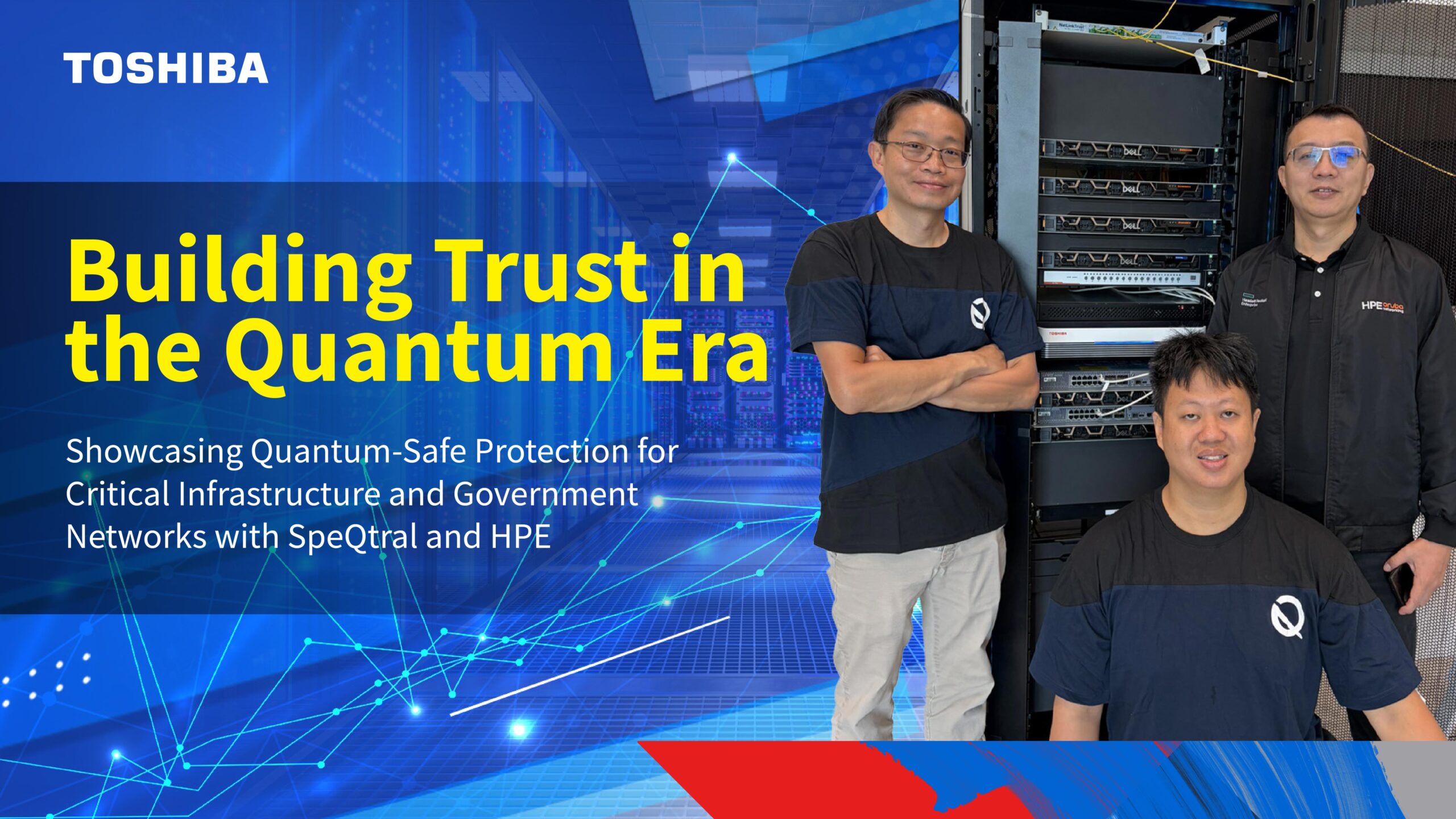
Toshiba, SpeQtral and HPE demonstrate a crypto‑agile, quantum‑safe VPN solution that layers post‑quantum cryptography with quantum key distribution to protect existing IPsec networks.
Introduction
IPsec VPNs are a cornerstone of secure enterprise and government communications, but the looming arrival of large‑scale quantum computers threatens to render today’s encryption vulnerable. In a recent validation, Toshiba, quantum‑security specialist SpeQtral, and HPE have shown how to retrofit existing IPsec deployments with quantum‑safe key material. By marrying Post‑Quantum Cryptography (PQC) with Quantum Key Distribution (QKD) on Toshiba’s Quantum‑Secure Networking (QSN) platform and HPE’s SRX Next‑Generation Firewall, the trio offers a practical, non‑disruptive path to crypto‑agility for critical‑infrastructure operators.
Layered Quantum‑Safe Protection
The integrated solution introduces two complementary defenses:
- Post‑Quantum Cryptography – Quantum‑resistant algorithms replace or augment traditional RSA/ECC keys, ensuring that even if a quantum computer can solve the underlying mathematical problems, the ciphertext remains secure.
- Quantum Key Distribution – QKD generates truly random encryption keys using quantum states, which are then exchanged over fiber links with provable security guarantees.
By feeding QKD‑derived keys into the IPsec tunnel and simultaneously employing PQC for key‑exchange, the system avoids reliance on a single technology. This layered approach mitigates “harvest‑now, decrypt‑later” attacks, where adversaries capture traffic today and hope to break it once quantum capabilities mature.
Seamless Integration with Existing Infrastructure
SpeQtral led the integration effort, confirming that the quantum‑safe key material can be injected into standard IPsec workflows without replacing firewalls, routers, or VPN concentrators. Key benefits include:
- Crypto‑agility – Organizations can swap or upgrade PQC algorithms as standards evolve, while the underlying QKD link remains unchanged.
- Minimal disruption – The solution leverages HPE’s SRX firewall, a familiar platform for many enterprises, allowing a “drop‑in” upgrade rather than a wholesale network redesign.
- Future‑proofing – The architecture is designed to accommodate higher‑rate QKD links and emerging PQC suites, protecting investments over the long term.
Practical Implications for Critical Networks
The validation targets sectors most exposed to long‑term confidentiality risks, such as:
- Critical infrastructure operators (energy, water, transport) that must guarantee data integrity for decades.
- Government agencies handling classified or sensitive communications.
- Enterprises with regulatory obligations for data protection.
Demonstrations at GovWare 2026 will showcase real‑world traffic flows, confirming that latency and throughput remain within acceptable bounds for typical VPN workloads. This evidence helps decision‑makers justify the incremental cost of adding QKD hardware and PQC software to existing security stacks.
Closing Thoughts
As quantum computing progresses, the security community faces a narrow window to transition to quantum‑resistant safeguards. Toshiba, SpeQtral, and HPE’s joint effort illustrates that the shift does not have to be disruptive. By layering PQC and QKD, organizations can protect today’s traffic while preserving the flexibility to adapt to future cryptographic standards. For operators of critical networks, the message is clear: start integrating quantum‑safe capabilities now, leveraging familiar infrastructure, to stay ahead of the quantum threat landscape.
Source
Read original sourceWhy we picked this
Accepted from curated QuantumUnzipped source (relevance scoring disabled).