UbiQD Wins New Mexico Grant for Quantum Light Source Development
UbiQD secured a $200,000 New Mexico grant to develop a room‑temperature, fiber‑coupled single‑photon source using its cadmium‑, lead‑, and mercury‑free quantum dots.
Introduction
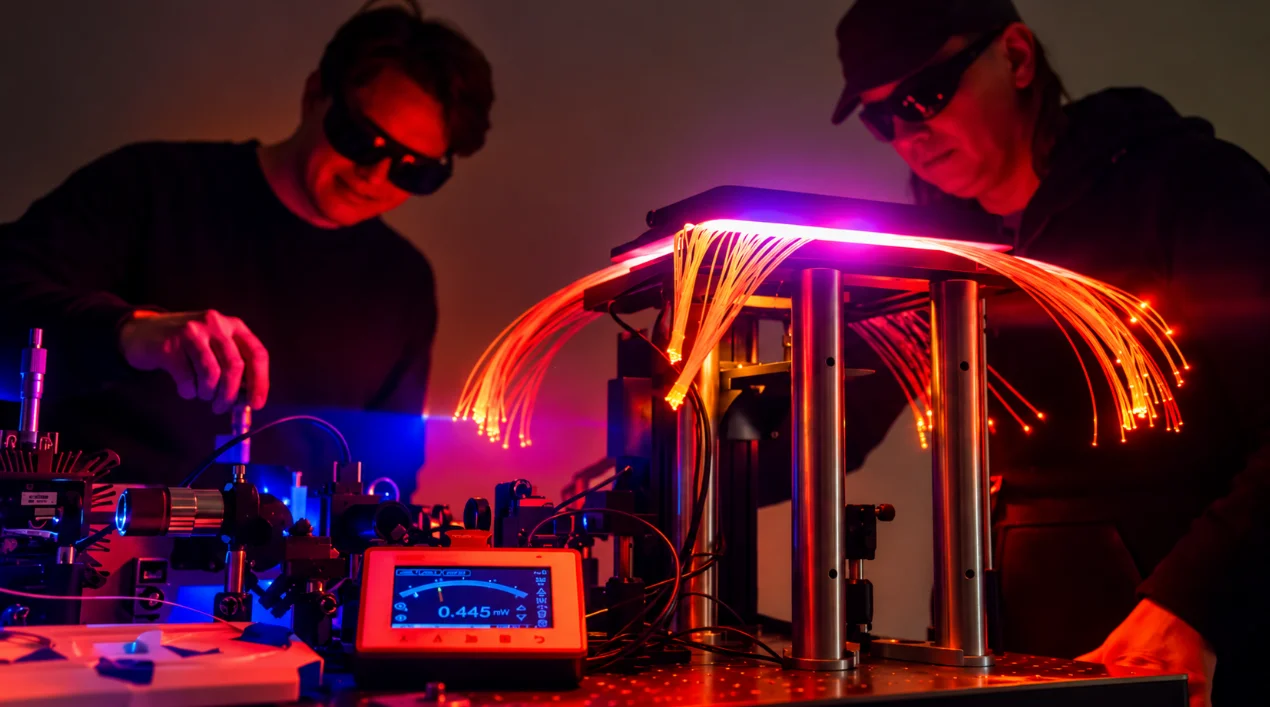
UbiQD, Inc., a specialist in quantum‑dot materials, has been awarded a $200,000 grant from New Mexico’s Technology & Innovation Office (TIO). The funding will support the creation of a room‑temperature, fiber‑optically coupled light source that emits single photons on demand—an essential component for next‑generation quantum computers and ultra‑secure quantum communication networks.
---
Why a New Single‑Photon Source Matters
Most current quantum‑computing platforms rely on superconducting circuits that must operate at temperatures just above absolute zero, requiring costly cryogenic infrastructure. Photonic quantum systems, by contrast, use individual photons to encode information, allowing data to travel long distances with minimal loss and enabling secure quantum‑key‑distribution networks. However, practical photonic hardware has been hampered by the lack of a reliable, room‑temperature single‑photon emitter that can be directly integrated with fiber‑optic links. Existing sources either emit multiple photons randomly or need deep‑cooling, limiting scalability and increasing system complexity.
---
UbiQD’s Quantum‑Dot Approach
UbiQD builds on a decade of research into I‑III‑VI semiconductor quantum dots that are free of hazardous cadmium, lead, and mercury. Prior collaborations with Los Alamos National Laboratory (2024‑2025) produced the first detailed measurements of single‑photon emission from these safer materials. The grant will fund optical equipment and prototype development at UbiQD’s Los Alamos headquarters. The team will:
- Characterize photon‑emission reliability – measuring the probability of emitting exactly one photon per excitation cycle.
- Refine quantum‑dot composition – iterating material formulations until they meet industry‑defined performance thresholds for purity, timing jitter, and wavelength tunability.
- Integrate with fiber optics – creating a compact, fiber‑coupled module that can be deployed in existing photonic architectures without additional cooling.
---
Intellectual‑Property Backbone
UbiQD’s strategy couples technology development with a robust patent portfolio. The company currently holds 17 U.S. patents, 23 international patents, and 27 pending applications. Notable filings include US 12,085,443, “Fiber‑coupled Broadband Light Source,” which covers the core architecture of the proposed device and has been granted in multiple jurisdictions. This layered IP approach protects the underlying quantum‑dot material, its processing into films or concentrates, and specific end‑use applications ranging from security inks to agricultural sensors.
---
Outlook and Market Implications
If successful, UbiQD’s room‑temperature single‑photon source could accelerate the adoption of photonic quantum processors by eliminating the need for expensive cryogenic hardware. It would also benefit quantum‑communication networks, where reliable on‑demand photon generation is critical for scaling secure links across metropolitan and inter‑city distances. Beyond quantum computing, the technology aligns with emerging demands for high‑speed optical interconnects in AI data centers, where electrical bottlenecks are becoming a limiting factor.
---
Conclusion
The New Mexico grant positions UbiQD to translate its laboratory‑proven quantum‑dot breakthroughs into a market‑ready photonic component. By delivering a safe, room‑temperature, fiber‑compatible single‑photon source, the company aims to bridge a key gap in the quantum‑hardware ecosystem, supporting both computing and communication applications while leveraging a strong intellectual‑property foundation.
Source
Read original sourceWhy we picked this
Accepted from curated QuantumUnzipped source (relevance scoring disabled).