UCSB’s Marquis team joins $27.9M institute to rebuild quantum junctions
UCSB’s Marquis team joins a new $27.9 M NSF‑funded MARQUIS institute to redesign Josephson junctions, aiming for semiconductor‑grade consistency that could unlock scalable quantum error correction.
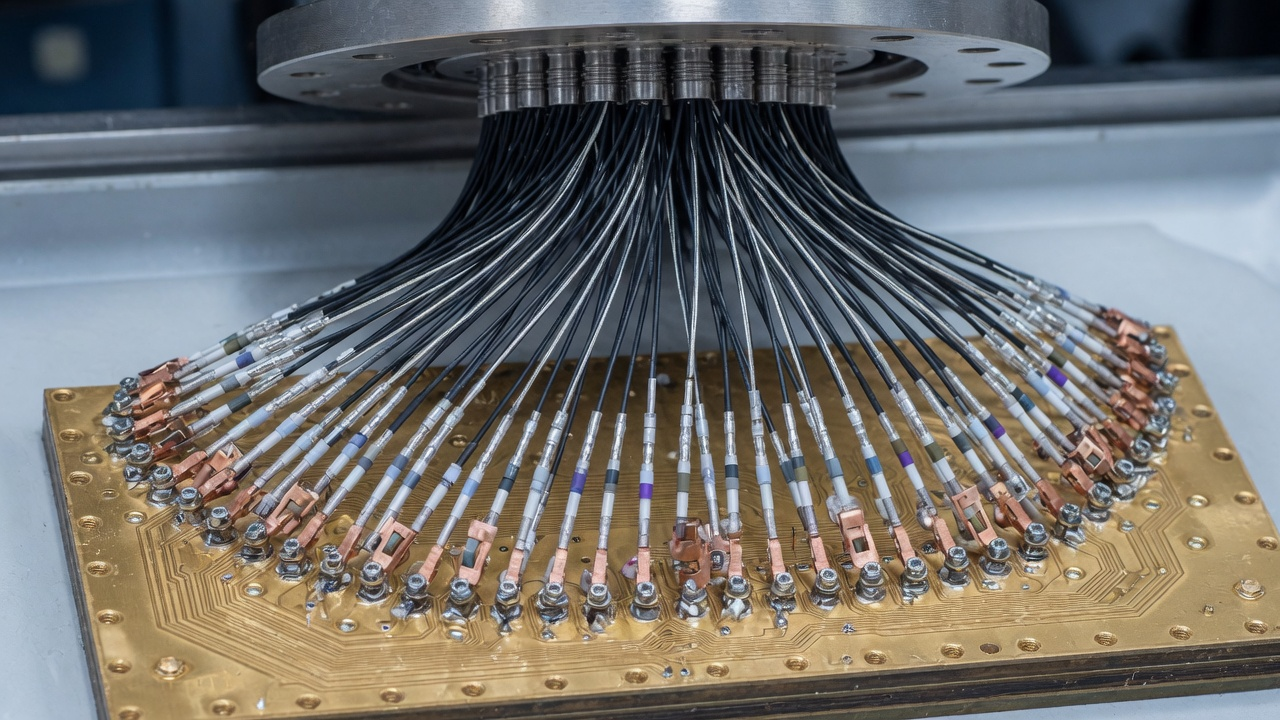
Rebuilding the Heart of Superconducting Qubits
UCSB’s Marquis team has become a core component of the newly announced MARQUIS institute, a $27.9 million, five‑year National Science Foundation effort that unites 24 labs across nine universities. The institute’s singular focus is the Josephson tunnel junction, the thin insulating barrier that defines a superconducting qubit’s behavior. After decades of progress on wiring, control electronics, and cryogenics, researchers now see the junction itself as the dominant source of error in today’s processors.
---
Why the Junction Matters
A Josephson junction consists of two superconductors separated by a nanometer‑scale dielectric—typically amorphous aluminum oxide. At this scale, even a single defect can create a two‑level system that absorbs microwave energy, degrading qubit coherence and inflating two‑qubit gate error rates. Current superconducting processors require an order‑of‑magnitude improvement in junction quality to support the error‑corrected logical qubits demanded by emerging algorithms.
---
A Three‑Pronged Expertise Hub
The MARQUIS team at UCSB brings together three complementary skill sets:
- Device Physics – Michel Devoret (Nobel laureate, pioneer of superconducting circuits) provides the experimental framework for isolating junction performance from other circuit elements.
- Materials Fabrication – Chris Palmstrøm leverages UCSB’s seven‑system molecular‑beam epitaxy (MBE) cluster to grow single‑crystal superconductors and dielectric heterostructures, targeting the precision of modern 300‑mm silicon fabs.
- Computational Materials Science – Chris Van de Walle models defect formation at the atomic level, drawing on prior work that linked sub‑ppm impurity concentrations to measurable device degradation.
Together, they aim to replace the disordered aluminum‑oxide barrier with a crystalline dielectric—potentially silicon or a silicon‑based compound—grown layer‑by‑layer under ultra‑high vacuum. This approach promises two key benefits:
- Reduced defect density, eliminating the two‑level systems that cause energy loss.
- Scalable manufacturing, enabling the same reproducibility achieved in semiconductor chips.
---
From Lab to Fab: The Path Forward
The institute’s roadmap emphasizes reproducibility over incremental tweaks. Early milestones include:
- Benchmarking guardrails: Devote’s group will develop measurement protocols that separate genuine junction improvements from ancillary circuit effects.
- Defect‑focused simulations: Van de Walle’s calculations will guide material choices by predicting which atomic configurations minimize loss.
- Prototype fabrication: Palmstrøm’s MBE line will produce test junctions with single‑crystal dielectrics, followed by integration into transmon qubits for performance validation.
If successful, the MARQUIS effort could shrink the number of physical qubits needed for a logical qubit by an order of magnitude, easing the cryogenic and control overhead that currently limits processor scaling.
---
Looking Ahead
The Josephson junction has powered superconducting quantum computers for roughly a quarter‑century. Its longevity is a testament to its early success, but the next generation of quantum algorithms—particularly those requiring deep error correction—demands a quantum‑grade material platform. By uniting device physics, advanced epitaxy, and atomistic modeling under one roof, UCSB’s Marquis team and the broader MARQUIS consortium are positioned to deliver that platform.
The outcome will not only advance quantum computing but also showcase how interdisciplinary collaboration can translate fundamental materials insights into manufacturable technology—a model that could accelerate progress across the entire quantum hardware ecosystem.
Source
Read original sourceWhy we picked this
Accepted from curated QuantumUnzipped source (relevance scoring disabled).