WISeSat.Space to Provide Satellites for Quantum Network
SEALSQ Corp is securing $15 million of satellite capacity from WISESat.Space to launch a twelve‑satellite quantum‑secure network, laying the groundwork for a future orbital trust platform.
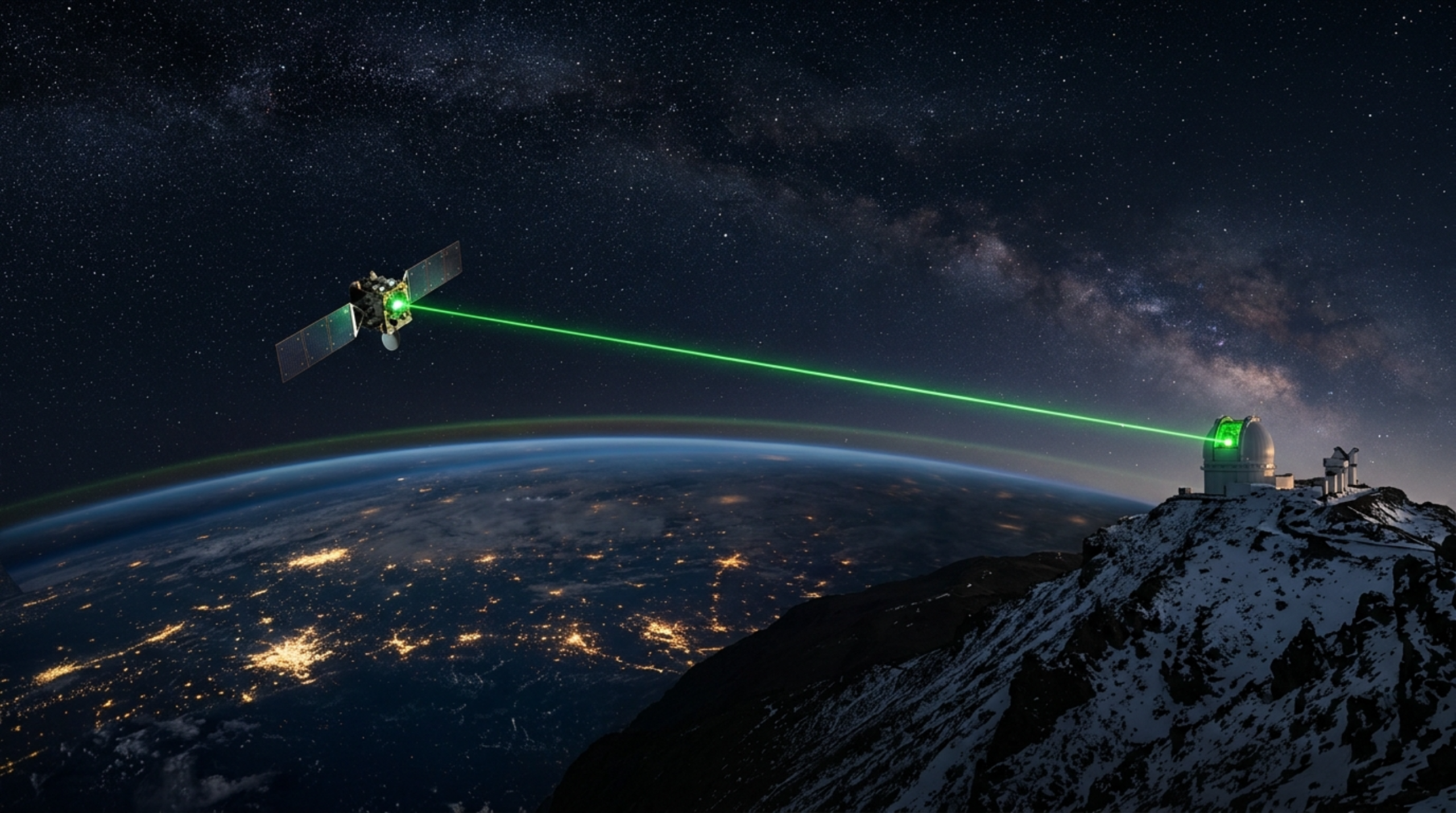
Quantum‑Secure Satellite Network Takes Shape
SEALSQ Corp (NASDAQ: LAES) has signed a binding letter of intent to acquire satellite capacity and operational services from its sister company, WISESat.Space (NASDAQ: SAIQ). Valued at roughly $15 million, the deal provides the initial twelve‑satellite constellation and ground infrastructure needed to launch the Quantum Spatial Orbital Cloud (QSOC), a secure communications layer built on quantum‑enhanced security protocols.
---
Why Satellite Capacity Matters for Quantum Security
Quantum‑resistant cryptography is becoming a priority as large‑scale quantum computers loom on the horizon. Traditional ground‑based networks are vulnerable to future attacks on public‑key algorithms, prompting a search for physically isolated, tamper‑resistant channels. Space‑based links offer several advantages:
- Line‑of‑sight isolation – Signals travel through the vacuum of space, reducing exposure to terrestrial interception.
- Global reach – A constellation can provide coverage across continents without relying on extensive fiber deployments.
- Integration with post‑quantum primitives – WISESat’s payloads are designed to host quantum‑key‑distribution (QKD) and other post‑quantum cryptographic services, enabling end‑to‑end security from orbit to device.
By securing WISESat’s satellite capacity, SEALSQ can embed its semiconductor‑level security expertise—public‑key infrastructure, digital identity, and key‑management—directly into the space layer, creating a sovereign “orbital trust platform.”
---
The Initial Twelve‑Satellite Build‑Out
The first phase of the partnership focuses on deploying twelve low‑Earth‑orbit (LEO) satellites equipped with:
- Secure communication transponders capable of handling post‑quantum encryption algorithms.
- On‑board key‑management modules that generate, store, and rotate cryptographic keys under strict hardware isolation.
- Telemetry and command links tied to a dedicated ground segment that will interface with SEALSQ’s existing security services.
Ground stations will act as trusted nodes, linking the orbital network to terrestrial data centers and end‑user devices. This architecture is intended to support services such as:
- Secure satellite‑to‑ground data exchange for government and enterprise customers.
- Trusted identity authentication for IoT devices operating in remote or contested environments.
- Cryptographic‑key distribution that leverages quantum‑enhanced randomness for stronger entropy.
---
Roadmap and Future Expansion
While the initial constellation is modest, WISESat’s roadmap envisions scaling to up to 100 satellites by 2033, contingent on:
- Funding milestones – Additional private and public capital will be required to finance launch contracts and manufacturing.
- Technical validation – Each capability (QKD, post‑quantum encryption, secure key storage) must meet regulatory and performance benchmarks before broader rollout.
- Regulatory clearance – Export controls and spectrum licensing will shape deployment timelines across regions.
The phased approach allows SEALSQ to validate the quantum‑secure services in real‑world scenarios, gather customer feedback, and iteratively improve the platform before committing to a larger fleet.
---
What This Means for the Quantum Ecosystem
The WISESat‑SEALSQ collaboration illustrates a growing convergence of quantum information science and space technology. By marrying satellite infrastructure with quantum‑ready security stacks, the partnership aims to:
- Demonstrate a commercially viable quantum‑secure communications service that can be offered to governments, defense contractors, and enterprises.
- Create a trusted data‑path from semiconductor chips to orbit and back, reducing attack surfaces at every layer.
- Catalyze further investment in quantum‑enabled satellite payloads, encouraging other players to explore similar models.
For observers, the deal signals that the quantum‑internet vision is moving beyond laboratory prototypes toward operational, market‑driven solutions.
---
Bottom Line
SEALSQ’s $15 million acquisition of WISESat’s satellite capacity marks a concrete step toward a quantum‑secure orbital network. The twelve‑satellite launch will serve as a testbed for post‑quantum encryption, trusted identity, and key‑management services, laying the foundation for a scalable, sovereign trust platform that could reshape secure communications in the quantum era.
Source
Read original sourceWhy we picked this
Accepted from curated QuantumUnzipped source (relevance scoring disabled).