WISeSat tests quantum-resistant security on new satellite in orbit
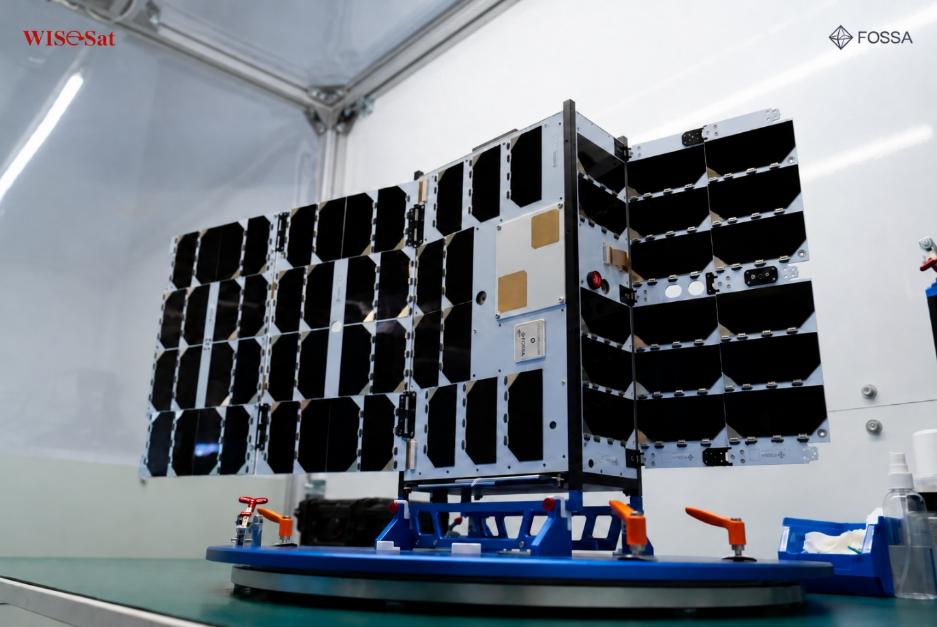
WISeSat’s new 6U satellite, FOSSASAT‑2E27, demonstrates quantum‑resistant security hardware in orbit, marking a step toward systematic, real‑world validation of post‑quantum cryptography for space systems.
Introduction
WISESat.Space has placed its latest 6U satellite, FOSSASAT‑2E27, into orbit aboard a SpaceX Falcon 9 mission. The payload integrates VaultIC secure‑element technology and is set to test quantum‑resistant security solutions under real space conditions. This launch extends a multi‑year partnership with FOSSA Systems and signals a shift from isolated lab demonstrations to repeatable, in‑orbit validation of post‑quantum cryptography.
Why Quantum‑Resistant Security Matters in Space
Satellite communications are increasingly critical for government, defense, and commercial infrastructure. As quantum computers mature, they threaten the mathematical foundations of today’s encryption schemes. A breach of satellite links could expose sensitive telemetry, command, and data streams. By deploying hardware‑based secure elements that are designed to resist quantum attacks, WISESat aims to future‑proof space assets before quantum capabilities become operational.
The In‑Orbit Testbed: FOSSASAT‑2E27
- Platform: A 6U CubeSat built on FOSSA’s modular bus, featuring software‑defined radio, onboard AI processing, and an electric‑propulsion demo.
- Security Hardware: The satellite carries VaultIC’s SEALSQ secure element and plans to add the QS7001 chip in later missions. Both are engineered for post‑quantum cryptographic algorithms.
- Testing Protocols: WISESat will run repeatable functional checks, monitor performance metrics (latency, power draw, error rates), and analyze how the secure elements behave under radiation, temperature swings, and real‑world communication loads.
- Collaboration Scope: Up to six FOSSA missions may host similar security payloads, creating a systematic validation pipeline that can inform both commercial customers and government procurement.
Strategic Context and Market Implications
The launch aligns with broader policy moves, notably the U.S. Executive Order 14412 (June 2026), which accelerates migration to quantum‑safe cryptography for federal systems. Demonstrated in‑orbit performance will become a differentiator for satellite operators seeking compliance and resilience. WISESat’s capital‑disciplined approach—leveraging existing satellite platforms rather than building dedicated test vehicles—keeps costs manageable while delivering credible data.
Looking Ahead
Successful validation could pave the way for a Quantum Spatial Orbital Cloud, a envisioned network of secure, quantum‑ready satellites offering encrypted communications for critical infrastructure. As more missions incorporate post‑quantum hardware, the industry will gain a clearer roadmap for scaling quantum‑resistant technologies across the rapidly expanding low‑Earth‑orbit ecosystem.
--- WISESat’s orbital test marks a practical step toward securing the next generation of space‑based communications against the looming quantum threat.
Source
Read original sourceWhy we picked this
Accepted from curated QuantumUnzipped source (relevance scoring disabled).