Your Best Quantum Error Correction Engineer Might Be a Bot
AI tools are already helping design and decode quantum error‑correction codes, speeding up the path toward fault‑tolerant quantum computers.
AI is Becoming a Quantum Error‑Correction Engineer
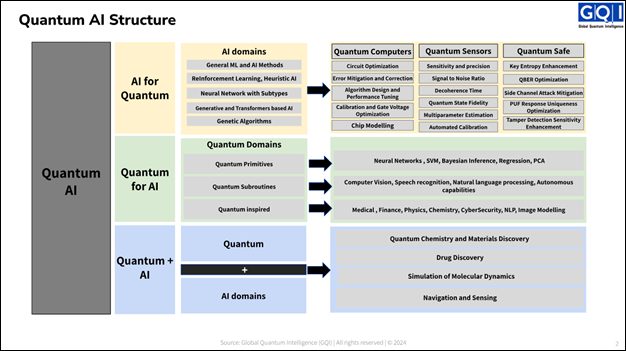
Quantum computing’s biggest hurdle—error correction—requires juggling physical qubits, ancilla measurements, decoder speed, and logical error rates. As processors scale from a few dozen qubits to thousands, the design space explodes beyond what a single engineer can explore manually. Recent AI‑driven frameworks are stepping in to generate, evaluate, and optimise error‑correction codes and decoders, turning a once‑human‑only task into a collaborative human‑AI workflow.
AI‑Generated QEC Code Candidates
IBM’s open‑source OpenEvolve couples large‑language models (LLMs) with an evolutionary search to propose algebraic expressions for new QEC codes. In a pilot run the system produced 465 distinct code candidates, some of which achieved the lowest physical‑to‑logical qubit ratios while others maximised error‑tolerance. Researchers can then sift through these suggestions, selecting the most promising for their hardware constraints.
Automated Fault‑Tolerant Architecture Optimisation
QC Design’s Meridian platform automates the end‑to‑end optimisation of fault‑tolerant hardware layouts. Across a benchmark suite of over 100 design tasks, Meridian reported a 14.6× median reduction in logical error rates compared with the best published classical methods. By exploring a far larger combinatorial space than a human could, the tool identifies unconventional qubit placements and ancilla schedules that improve overall code performance.
AI‑Powered Decoders for Real‑Time Error Detection
Decoding ancilla measurement patterns is a classic bottleneck. Google’s AlphaQubit uses a transformer‑based neural network to interpret these patterns, delivering 6 % lower error rates than tensor‑network decoders and 30 % better than correlated‑matching approaches. The system also scales to simulated devices with up to 241 qubits, maintaining accuracy over many error‑correction cycles.
NVIDIA’s Ising Decoding offers two 3‑D convolutional models—one tuned for speed, the other for accuracy. Compared with the open‑source standard pyMatching, the models are up to 2.5× faster and 3× more accurate, enabling near‑real‑time decoding on GPUs and FPGAs.
What This Means for Quantum Users
- Fewer physical qubits per logical qubit: Better codes and decoders shrink the hardware overhead, letting users run algorithms on smaller, cheaper machines that arrive sooner.
- Higher logical fidelity: Lower logical error rates translate directly into more reliable computation outcomes.
- Reduced wall‑clock time: Faster decoding shortens the overall runtime of quantum workloads, a critical factor for large‑scale problems.
While it would be an exaggeration to claim a fully autonomous “bot engineer” has replaced human expertise, AI is undeniably accelerating the iterative loop of QEC research. Engineers now have powerful assistants that generate hypotheses, evaluate massive design spaces, and fine‑tune decoders—allowing them to focus on higher‑level strategy and integration.
Looking Ahead
As quantum processors continue to grow, the synergy between AI and QEC will become even more essential. Future work will likely involve tighter integration of AI models with hardware control stacks, co‑design of error‑correction protocols, and broader validation across multiple quantum platforms. The result should be a smoother, faster path toward the fault‑tolerant machines needed for commercial quantum advantage.
Hype check
PartlyThe article cites AI‑driven tools with performance numbers, but the evidence is limited to press releases and internal tests without peer‑review or independent verification.
- Peer-reviewed paper, or press release only?Press release only — No peer‑reviewed paper or preprint is referenced; only product announcements.
- Error-corrected (logical) qubits, or physical qubits only?Logical / not a qubit claim — The claim does not hinge on a physical vs. logical qubit count.
- A new milestone, or a rebrand / restatement?New — AI‑generated code candidates and decoder improvements are presented as new results.
- Independent confirmation?Unclear — No external validation or replication is mentioned in the input.
- Does the headline claim match what the source shows?Matches — Headline about a bot engineer aligns with the article’s discussion of AI assistance.
An editorial assessment of the claim as reported, not a judgment of the company or researchers. How we rate hype →
Source
Read original sourceWhy we picked this
Accepted from curated QuantumUnzipped source (relevance scoring disabled).